Project
antoniolupi has designed high-end bathrooms since 1950 and addresses architects, interior designers and high-profile clients. Dinamo has looked after its digital product for over ten years.
Antonio Lupi: ten years of digital product for the luxury bathroom
- Client
- Antonio Lupi
- Area
- Identity, Development
- Year
- 2018 – present
- Main link
- Go to the website
antoniolupi has designed and produced taps, baths, showers, basins and furniture systems since 1950, working with designers such as Carlo Colombo, Domenico De Palo, Daniel Debiasi and Federico Sandri, Gabriele and Oscar Buratti. The audience is demanding, architects, interior designers, high-profile residential clients, and it expects from the digital channel the same level of care as the physical product.
For antoniolupi, Dinamo has looked after the digital product for over ten years. Strategy, design, development, configurator, restricted area, ongoing maintenance. The result is not a website but an ecosystem, grown alongside the brand through several generations of web technology.
antoniolupi's digital product has to look like antoniolupi before it looks like a website.
The approach: a living ecosystem
Dinamo treated the digital product as a living ecosystem. Three principles have held the work together over time. Radical visual consistency, made of cleanness, white space, quiet typography and photography that lets the product speak. Modular architecture, with models built to take new collections and new designers without redesigning from scratch each time. Maintenance as a design phase, the ten per cent of launch-level attention repeated every year for ten years.
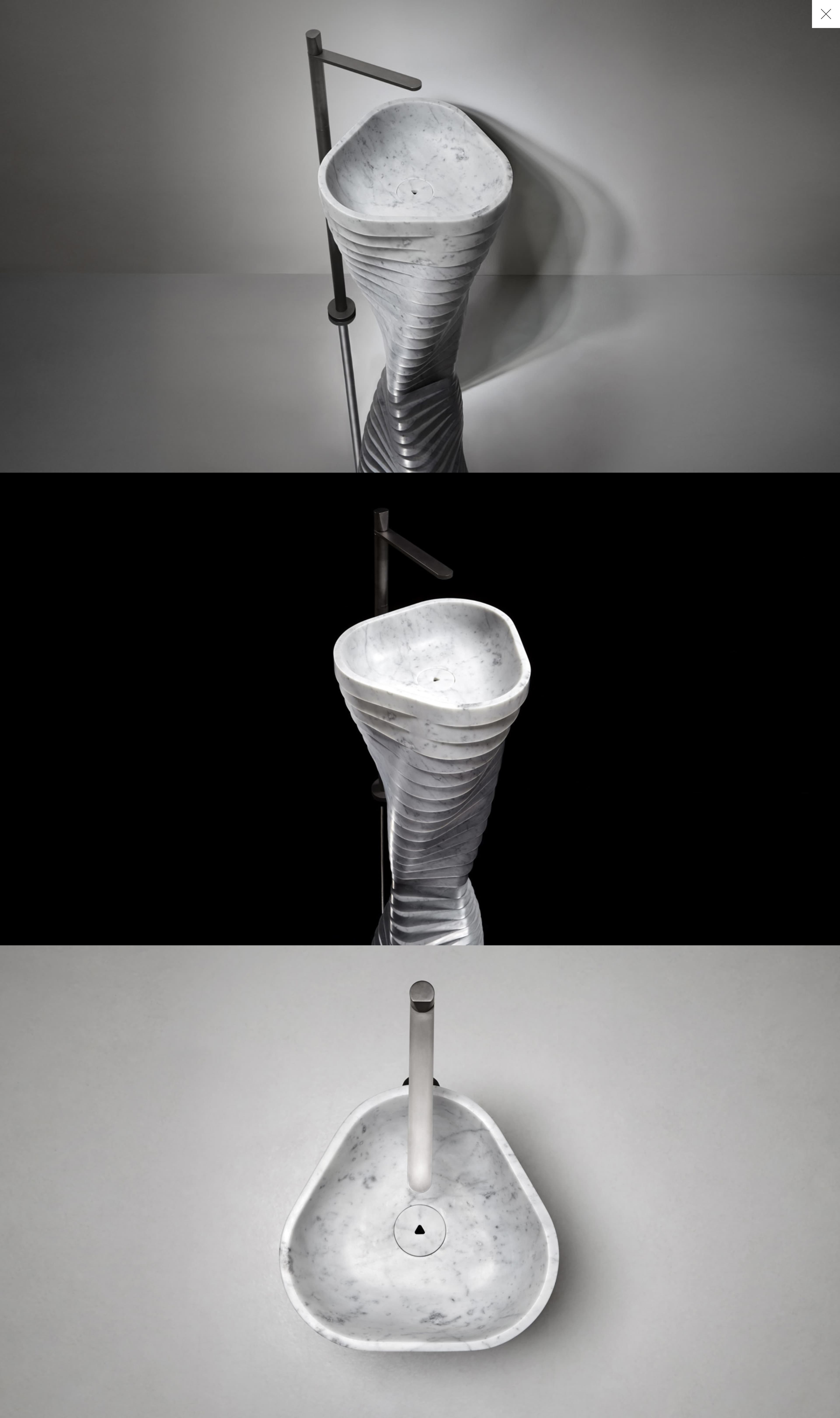
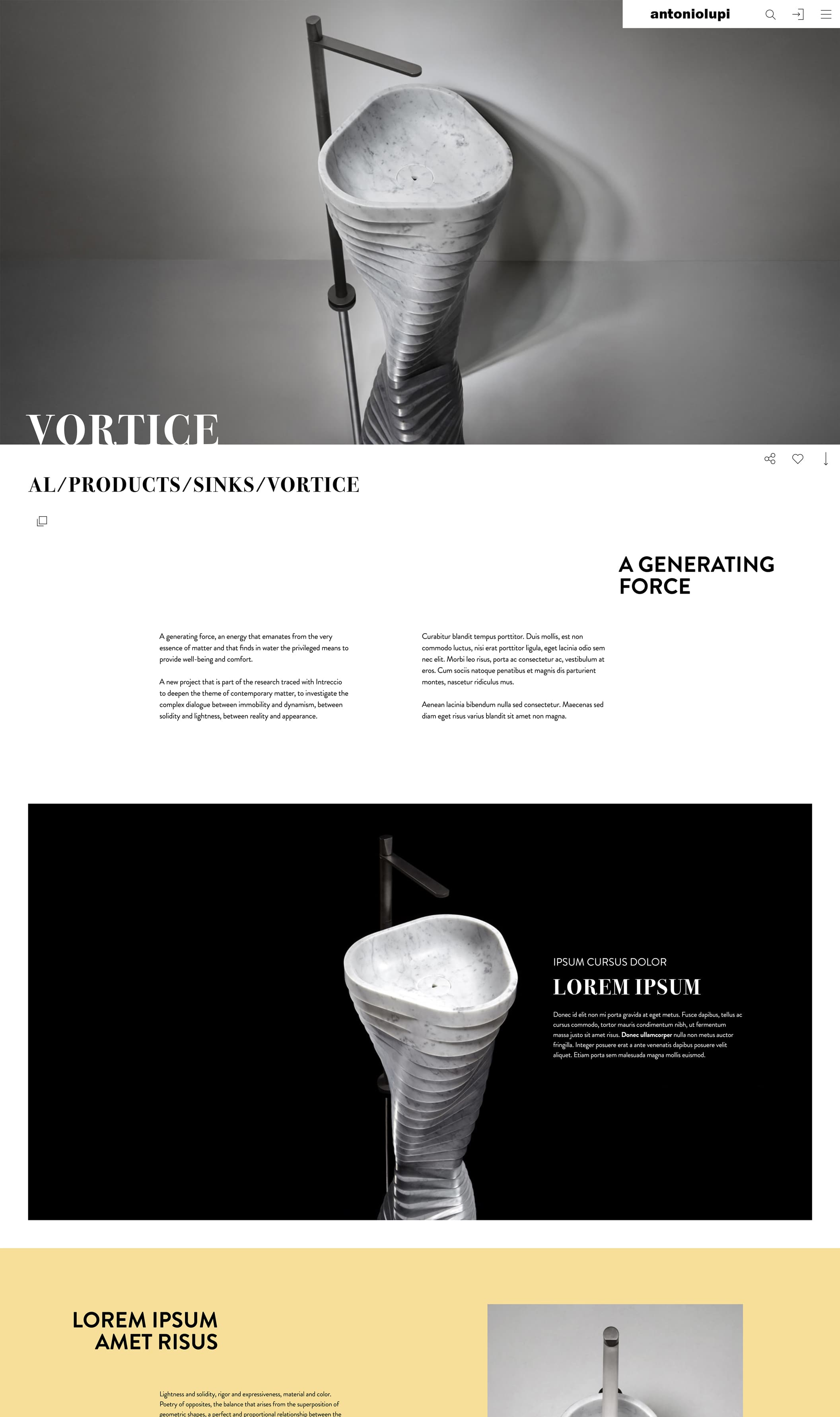
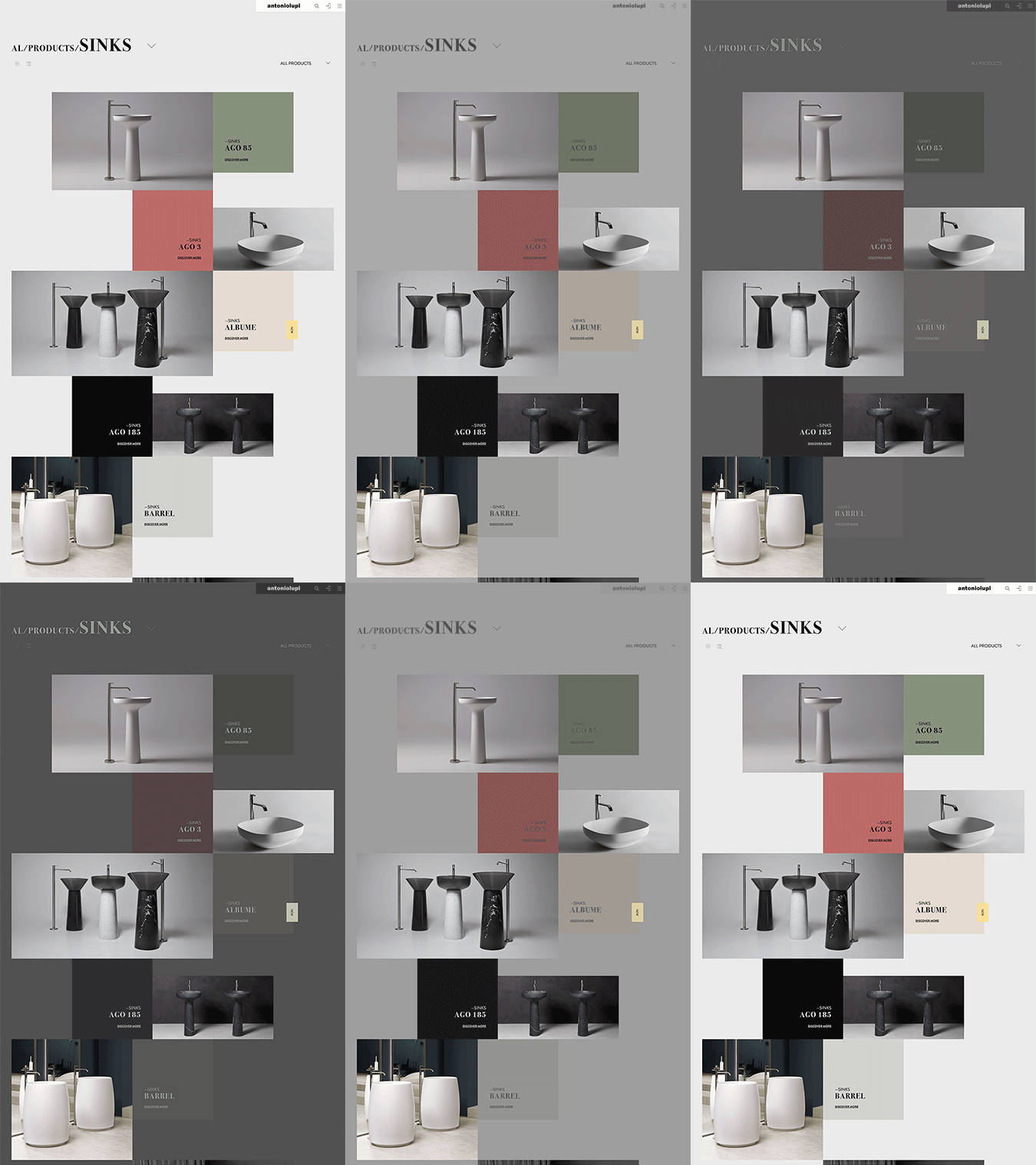
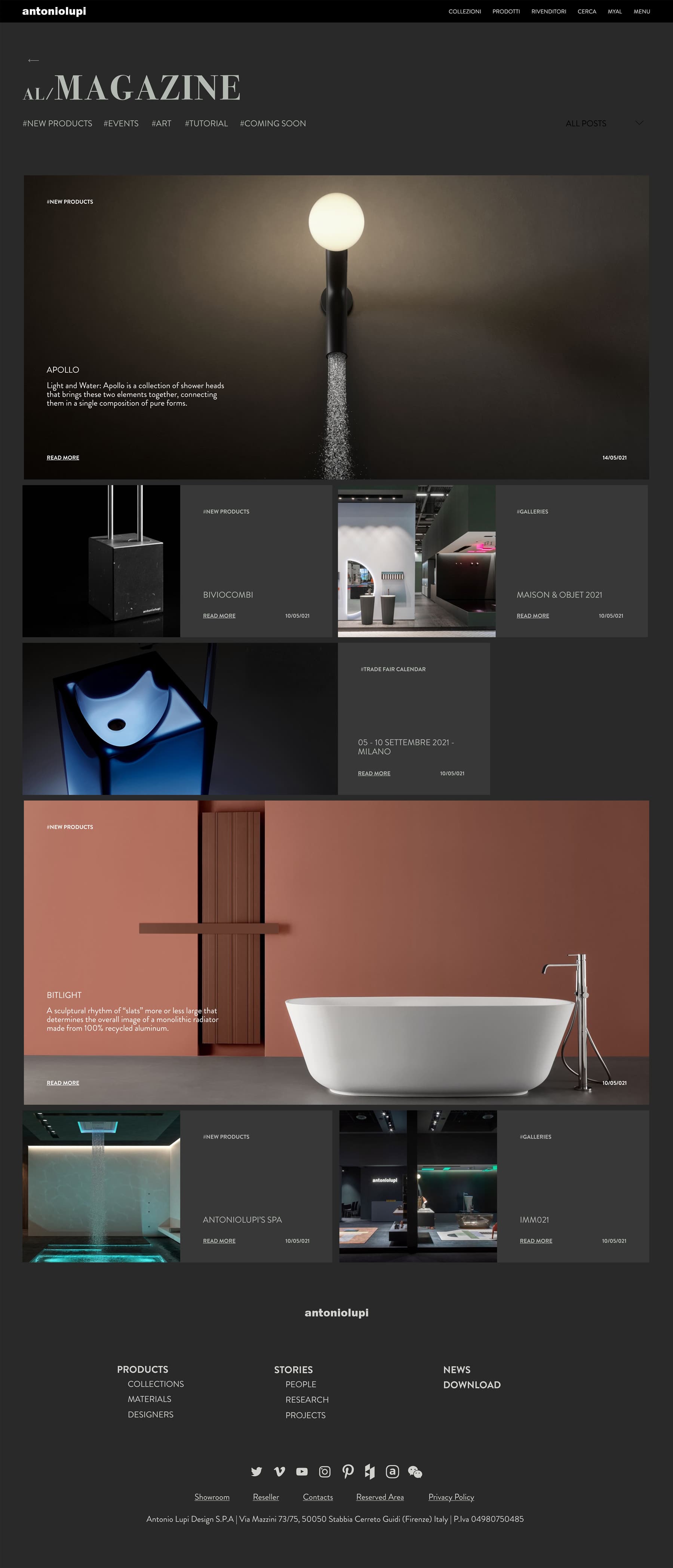
The technical choices decouple what lasts from what changes. The data model, products, finishes, designers, collections, projects, showrooms, stays stable and portable. The presentation layer is renewed when needed. The same dataset feeds several views of the catalogue, by product, by collection, by designer, by finish. The same information, four different readings, one source of truth.
Every product page is also a hub of downloadable assets: technical and maintenance sheets, manuals, 3D and 2D models, category catalogues and periodic catalogues such as the Catalogo News. They are fields of the product model, managed by the client without development work for every new file. Today the site is a single page application with fluid, cinematic navigation, where animation and response times are design elements. Internationalisation is structural, covering very different languages and markets, integrating the international showrooms, from Annecy onwards, and including a presence on Asian channels such as WeChat.
The configurator and the MyAL restricted area
The high-end bathroom lives on personalisation. A unit is a composition of modules, dimensions, finishes, handles, basins and mirrors. Dinamo built a configurator that takes the user through the choices in a linear way, with a visual preview consistent at every step. It works on top of the same data model as the catalogue, one source of truth for variants, codes and availability. It serves two audiences through the same interface: the end customer exploring possibilities and the professional closing a technical specification.
MyAL is the authenticated space for architects, designers and retailers. It centralises the materials the general public does not see: detail sheets, CAD, renders, price lists, certifications, images for presentations, organised by collection and type. It reduces the volume of requests to customer care and speeds up the professional's daily work. From MyAL comes its desktop extension as well, the antoniolupi app for Windows and macOS, designed for the sales network and the showrooms.