Project
For APAR, Pubbliche Assistenze Senesi, we designed Connessioni Sociali together with operators and associations: a local service that connects people, help desks, organisations and volunteers
Connessioni Sociali: the application that lets a network of local services work together
- Area
- Identity, Development
- Year
- 2025
- Credits
- Luchadora
Connessioni Sociali was born within the network coordinated by APAR, Pubbliche Assistenze Senesi, which brings together civil society organisations and third-sector associations in the province of Siena.
The area already has skills, volunteers and many different services: health and social transport, delivery of medicines and groceries, loan of mobility aids, accompaniment, distribution of clothes and other forms of support.
The starting point of the project was to understand how to turn this variety of resources into an accessible, coordinated service.
A person asking for help should not need to know which association to contact. They should be able to describe their need at a help desk, physical or digital, and find on the other side a network able to understand the request, identify the most suitable response and follow it over time.
Connessioni Sociali was created to make this possible.
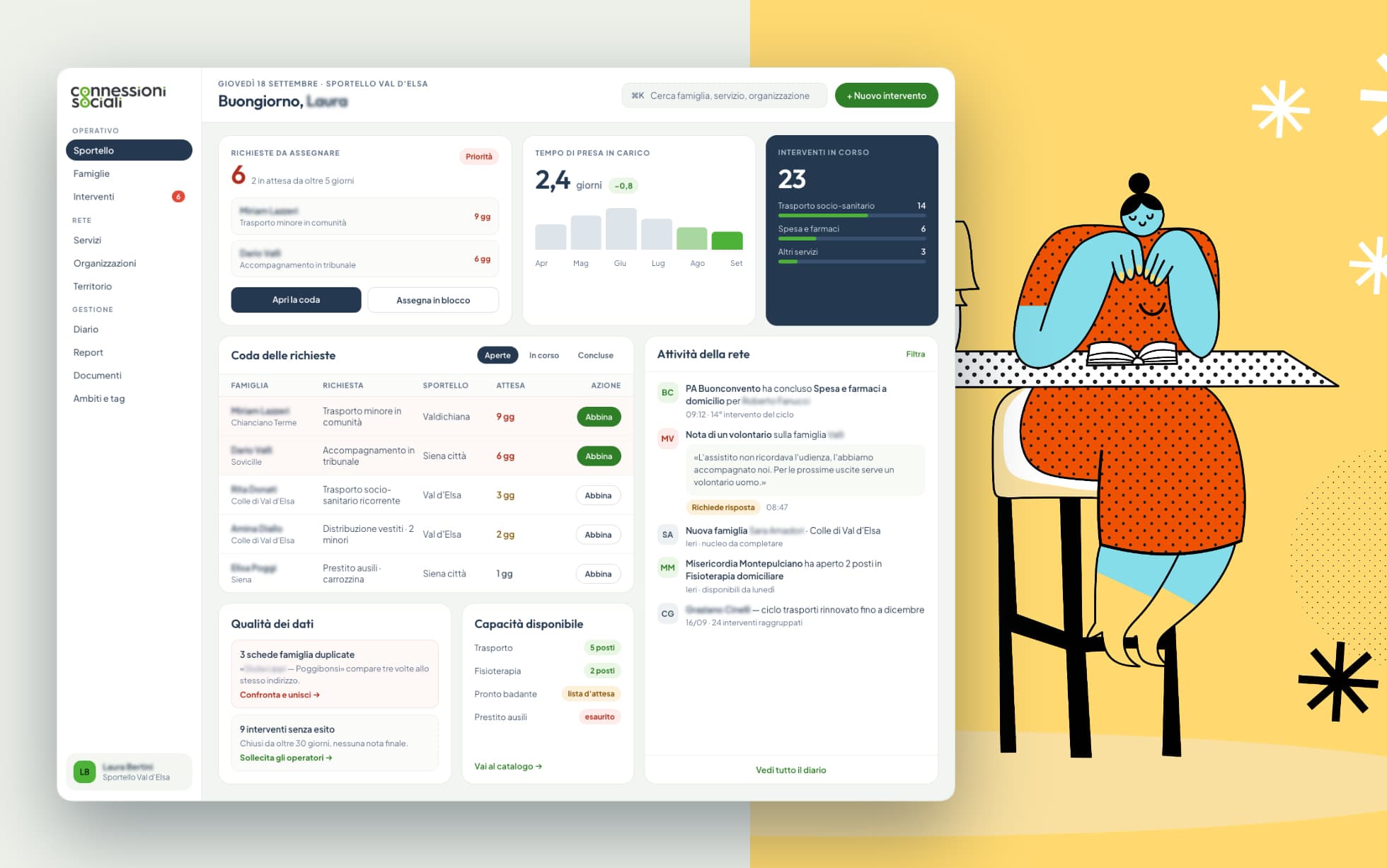
The challenge: designing the service first
This was not about digitising a process that already existed. The service itself had to be designed. Together with APAR and the people involved in the network, we worked to understand what happens from the moment a need emerges: what information is required, who needs to see it, how a request is assessed, how an available association is found, what happens when no one can respond immediately, how an intervention is followed over time.
Co-design turned knowledge spread across operators, volunteers and associations into a shared model. From that model came, at the same time, the way the service works and the structure of the application.
The interface is the visible part of deeper work: defining roles, relationships, states, responsibilities and flows simple enough to be used every day and structured enough to let a network of different organisations work together.
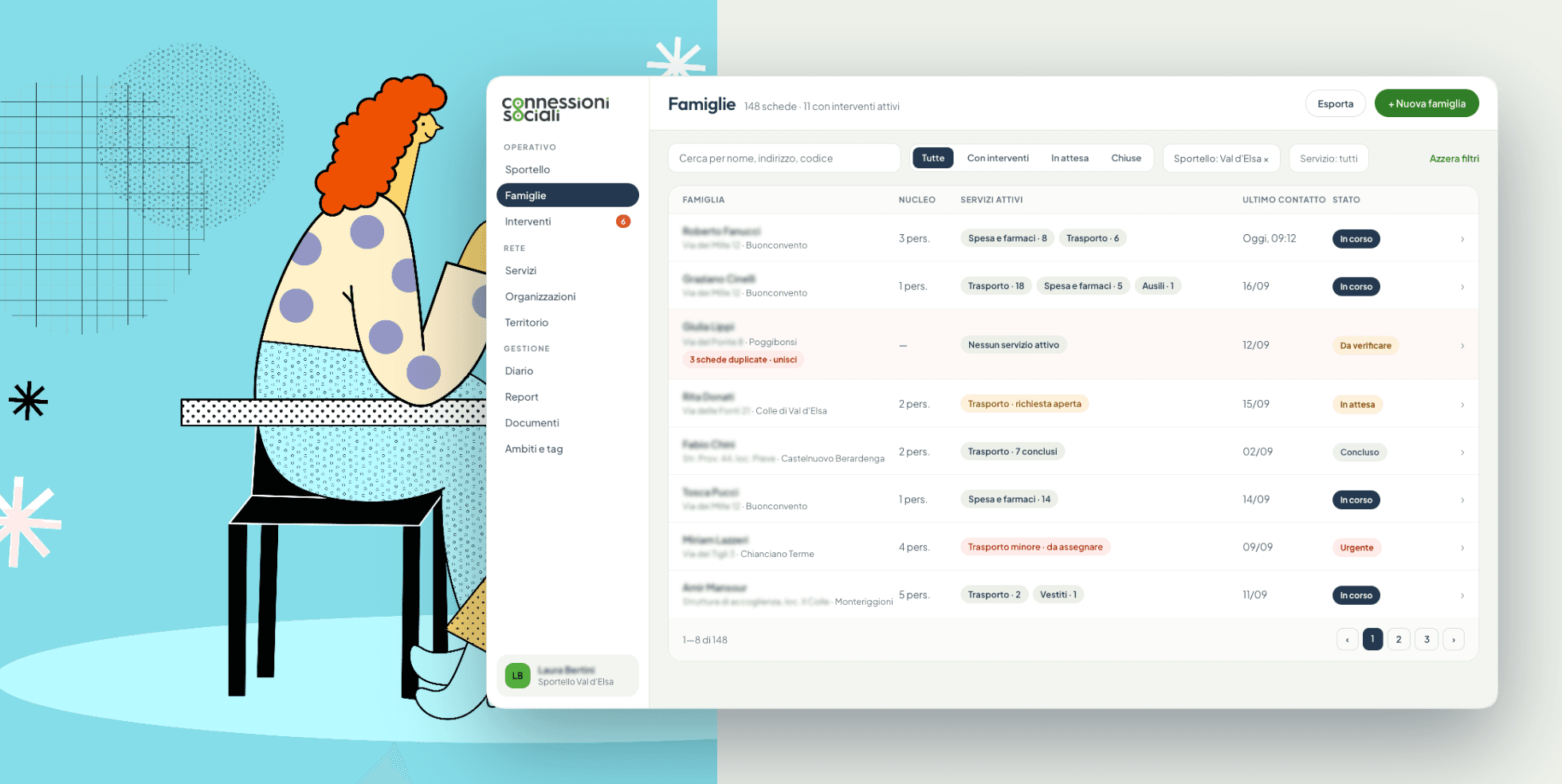
A visual language for the service
Alongside the design of the website and the application, Luchadora created the illustration project for Connessioni Sociali.
The illustrations make a complex service more accessible and bring out its human side: behind requests, interventions and processes there are people asking for help, volunteers who take care of them and a network of organisations trying to build a response. The illustrated identity becomes part of the project experience and gives the public communication of Connessioni Sociali a recognisable, close and non-institutional tone.
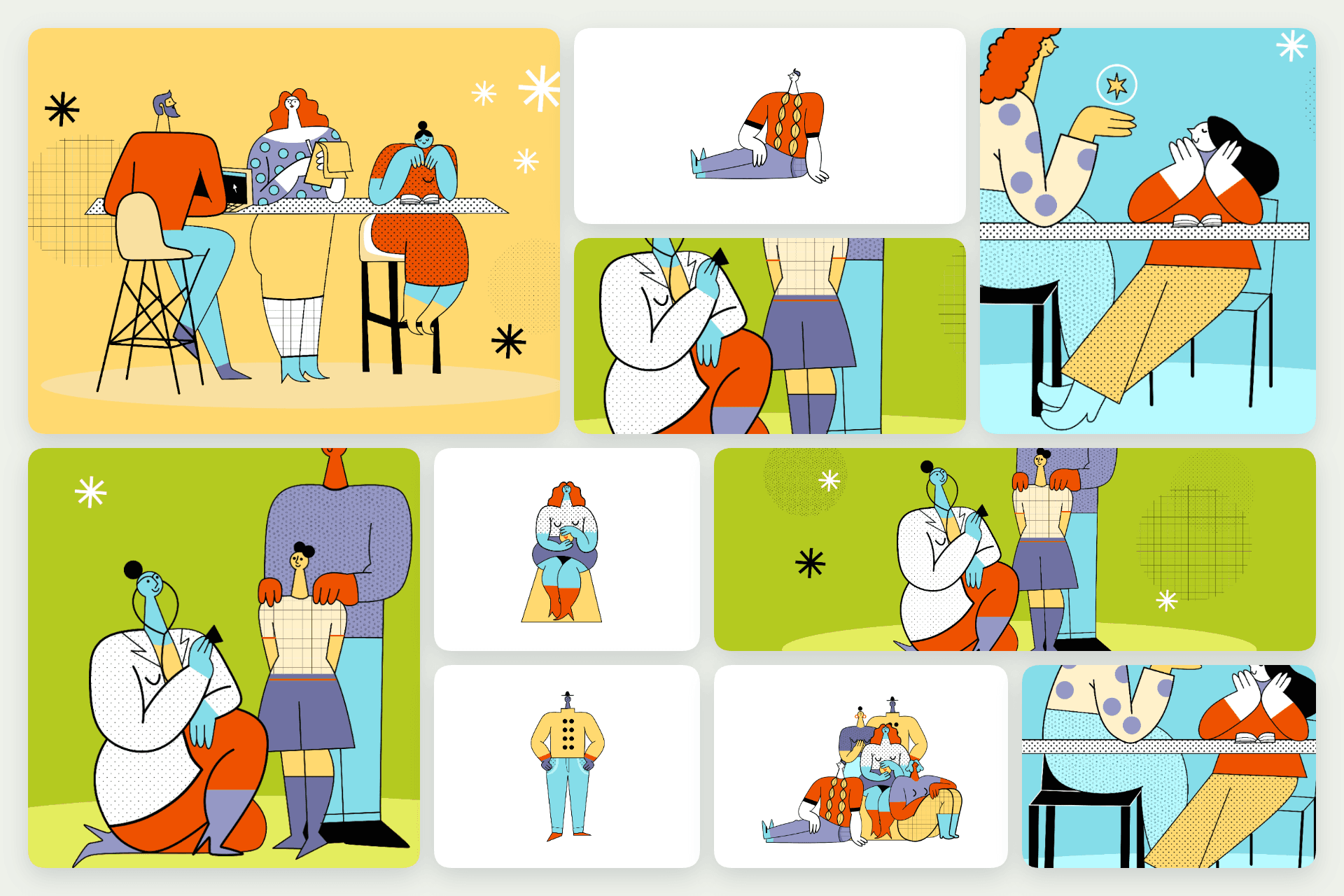
From need to response
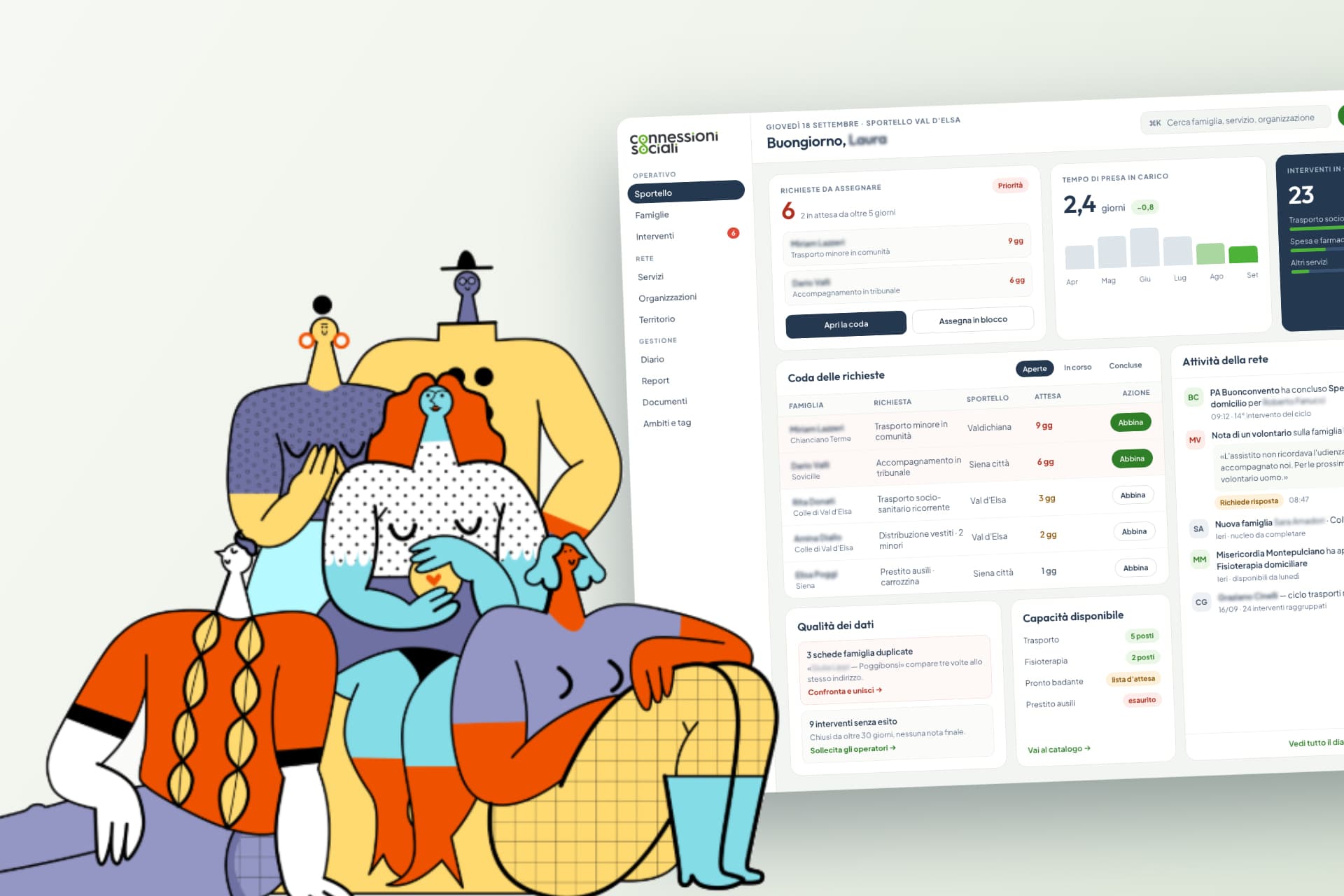
The system is built around a simple path: a person expresses a need, the help desk turns it into a request, the network identifies who can respond and the intervention is followed over time.
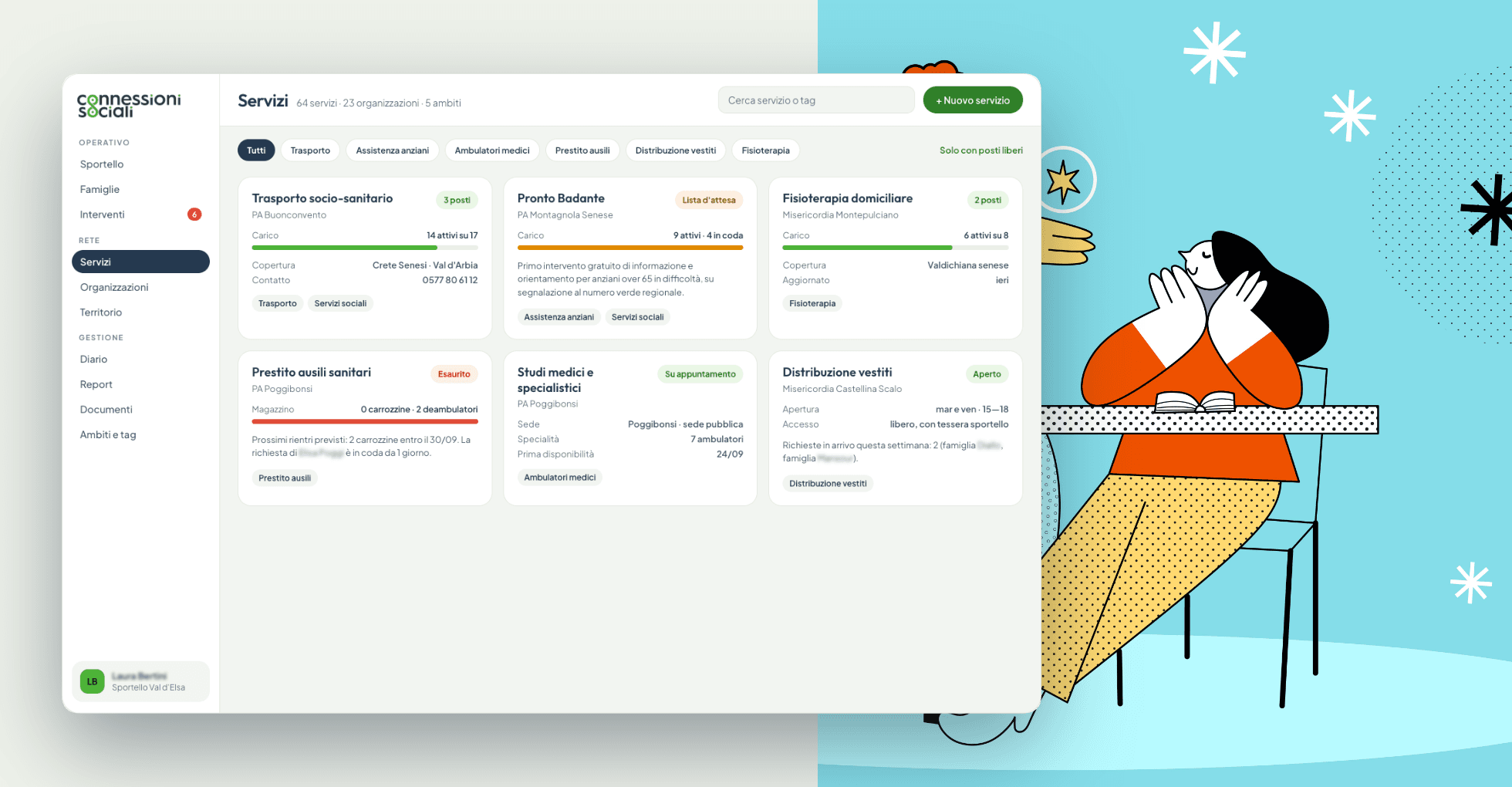
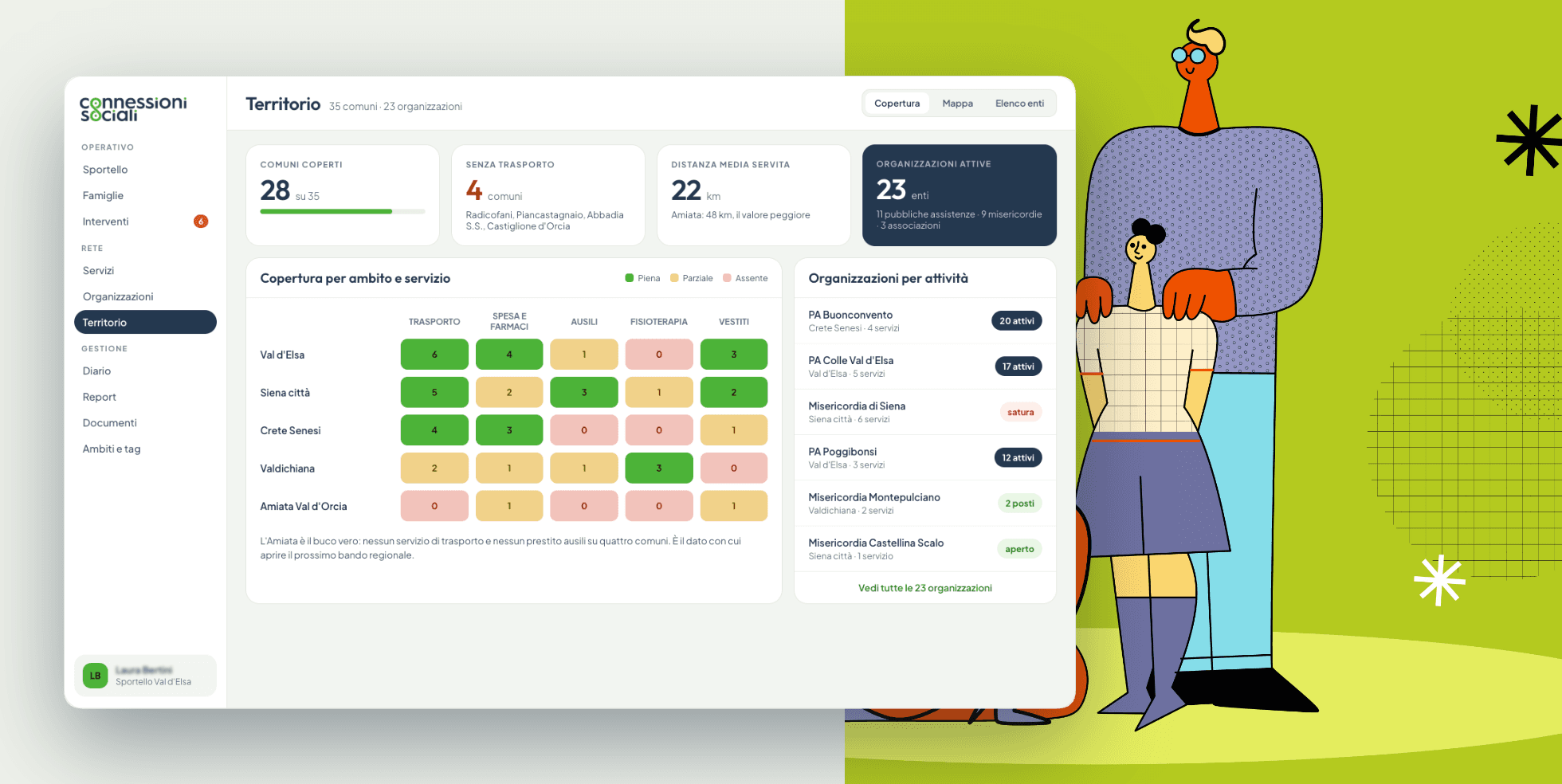
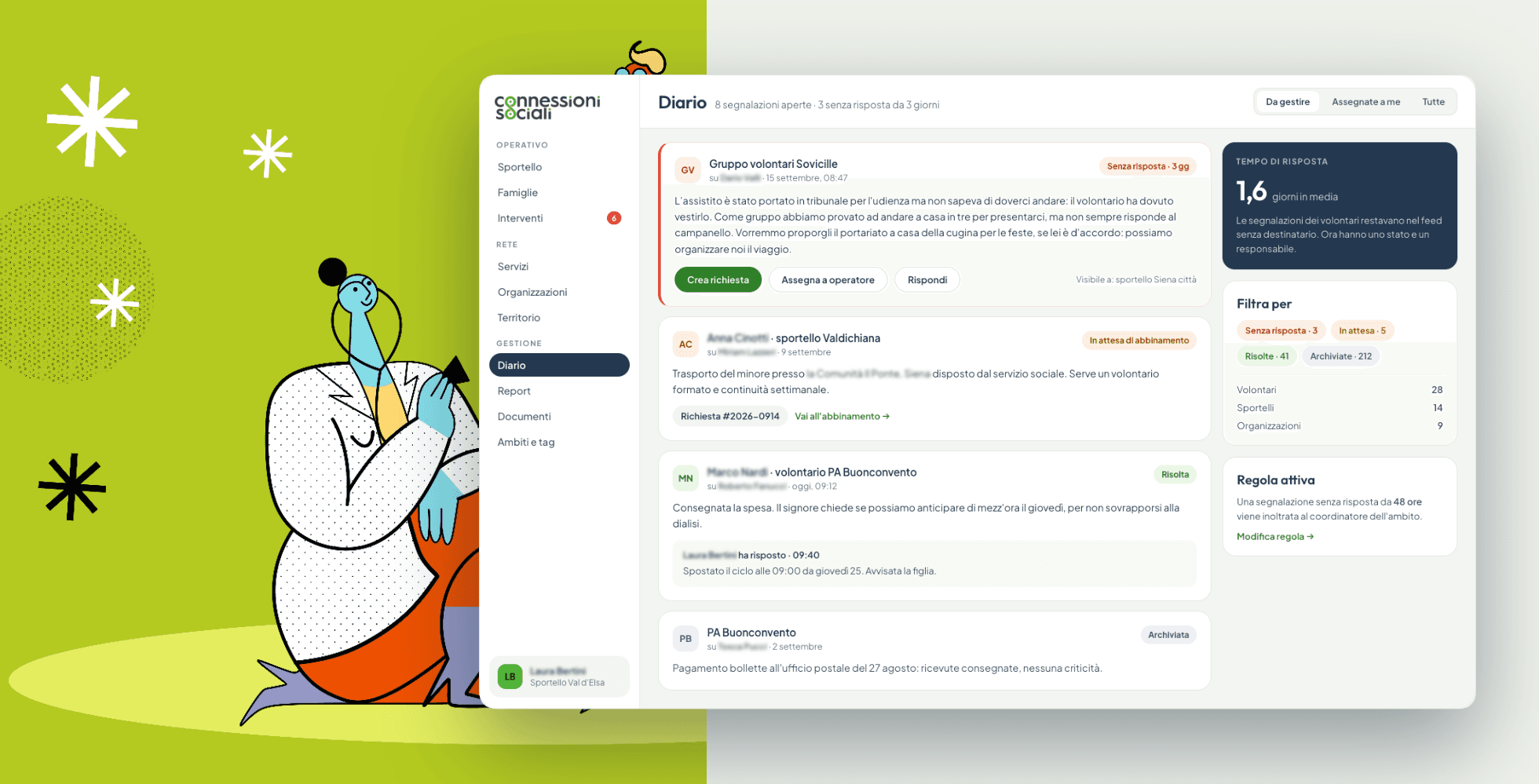
The digital project supports the whole path. The public website lets people understand which forms of support exist, find the help desks and submit a request. The application is the network’s workspace: here requests are assessed, matched with available resources, assigned and followed up.
The two environments share the same logic. A request sent from the website does not become an email to forward. It goes straight into the case management process.
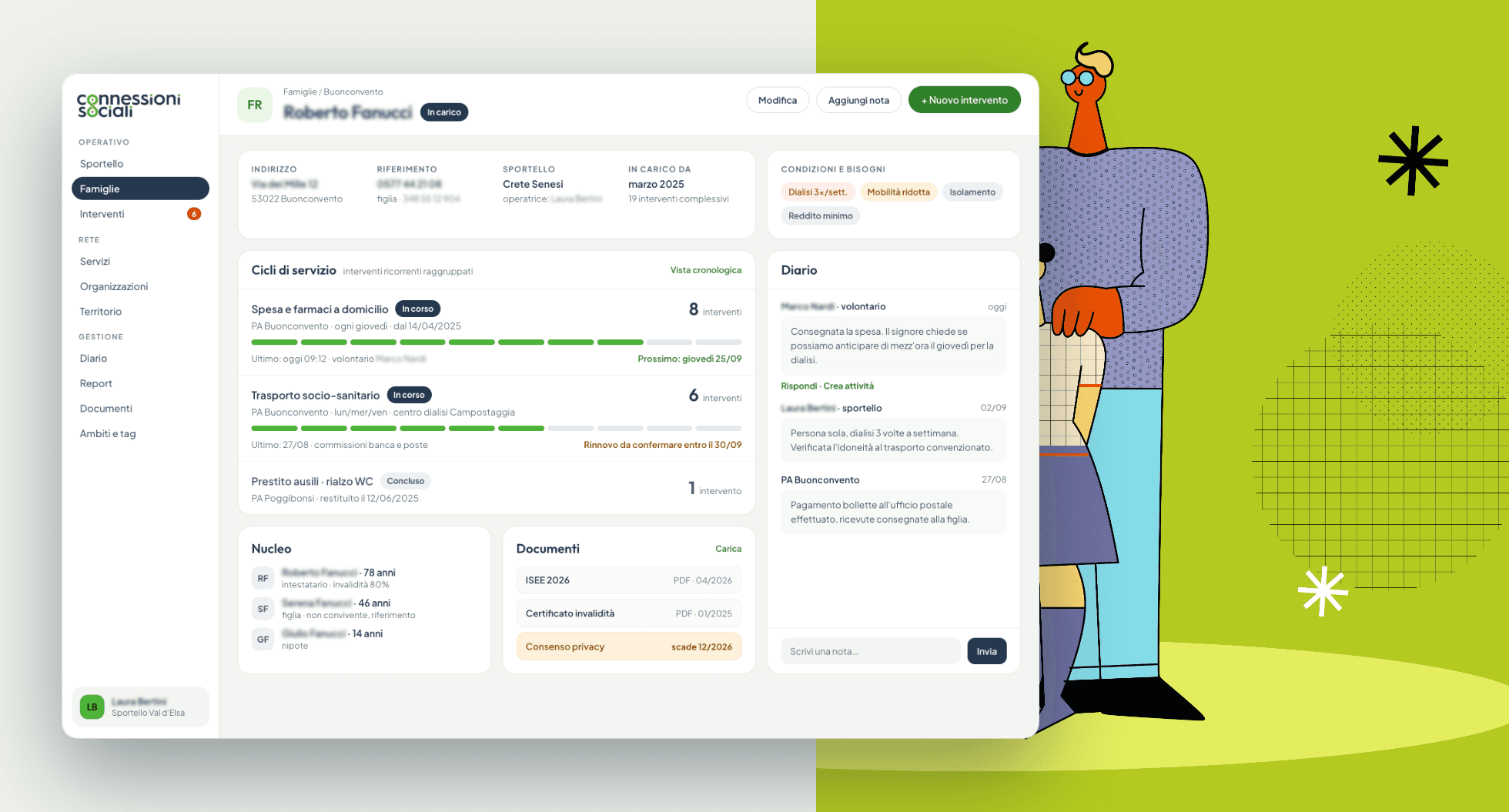
The website as the first help desk
People looking for help arrive with a problem, rarely with the exact name of the service or organisation to turn to. This is why we organised the website around needs and possible paths, rather than around the structure of the associations.
The content leads to different areas of support (social, economic, cultural, health, education and training), while the map shows the fixed and mobile help desks and their opening hours. The contact form was also designed as part of the service: it collects the information needed to start handling the case and opens a request directly in the application. The website is not a showcase separate from the service. It is one of its entry points.
The core of the application: matching a request with who can respond
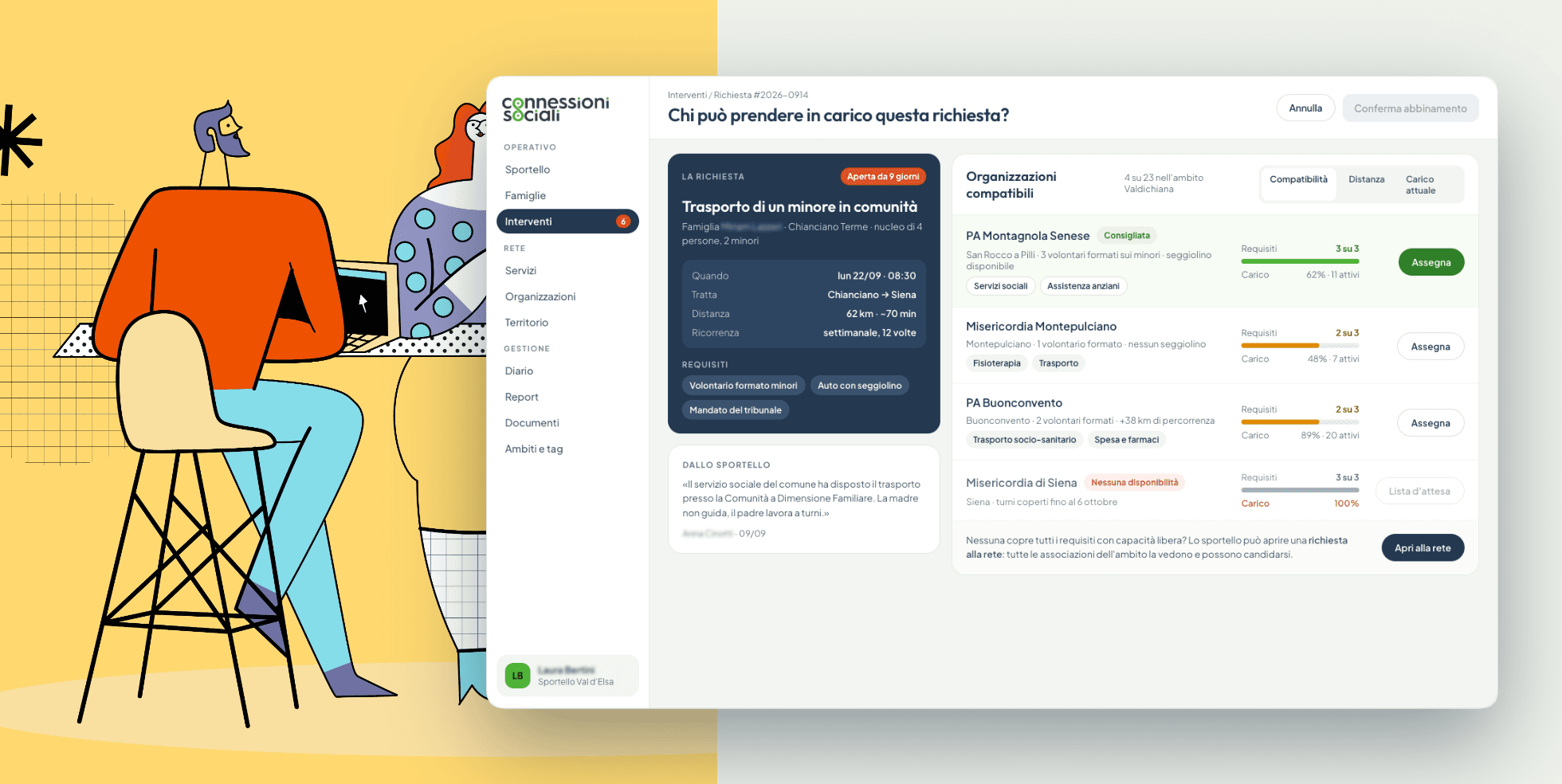
One of the central questions raised during co-design was very practical: how do you know who, within the network, can actually take on a request? Knowing that an association offers a certain service is not enough. A request may need a volunteer with specific training, a suitable vehicle, a particular authorisation or simply capacity available at that moment.
We translated this complexity into a matching screen. On one side are the requirements of the request. On the other, the organisations in the network that can respond, sorted by compatibility, distance and workload.
The operator can see not only who offers a service, but who is in a position to provide it for that person, at that moment. If no organisation meets all the requirements straight away, the request can be opened to the network. The associations in that area see it and can offer their availability. A process involving many people and many variables finds a common place where it can be managed.