Project
The national recovery plan partnership for the economic sustainability of systems and territories: identity, website and dissemination across the full three years.
GRINS: the national recovery plan partnership for economic and financial sustainability

- Client
- GRINS Foundation
- Area
- Identity, Development, Relations
- Year
- 2023-2026
- Main link
- Go to the website
GRINS is one of the fourteen extended partnerships of the national recovery plan funded by the Ministry of University and Research, under Theme 9, the economic and financial sustainability of systems and territories. The network brings together 27 bodies, public and private universities, companies, banks and research centres, and a critical mass of over 350 people working across nine research areas, 35 work packages, more than 150 tasks and over 90 deliverables in the three years of the programme.
The GRINS Foundation asked Dinamo to handle identity, website and dissemination for the whole three years. The project's scientific axis is AMELIA, the open data platform developed by the network. Our work is to explain it, set it in context and make it reachable by its audiences.
Turning the complexity of a network of 27 bodies and 350 people into a system of access navigable on several levels.
The identity came out of a double phase: a study of the sector and a participatory exchange with the client. From the workshop emerged GRINS's values, innovative, sustainable, collaborative, reliable, and a tone of voice both authoritative and empathetic, built on transparency and accountability. The logo holds public research and industrial innovation together. A circle of radial forms and a semicircle at the base stylise the letter G and suggest at once a rising sun, a smile, a loader and a flow of data. An open mark, legible in as many registers as the partnership it stands for.

The website: articulating the complexity of the network
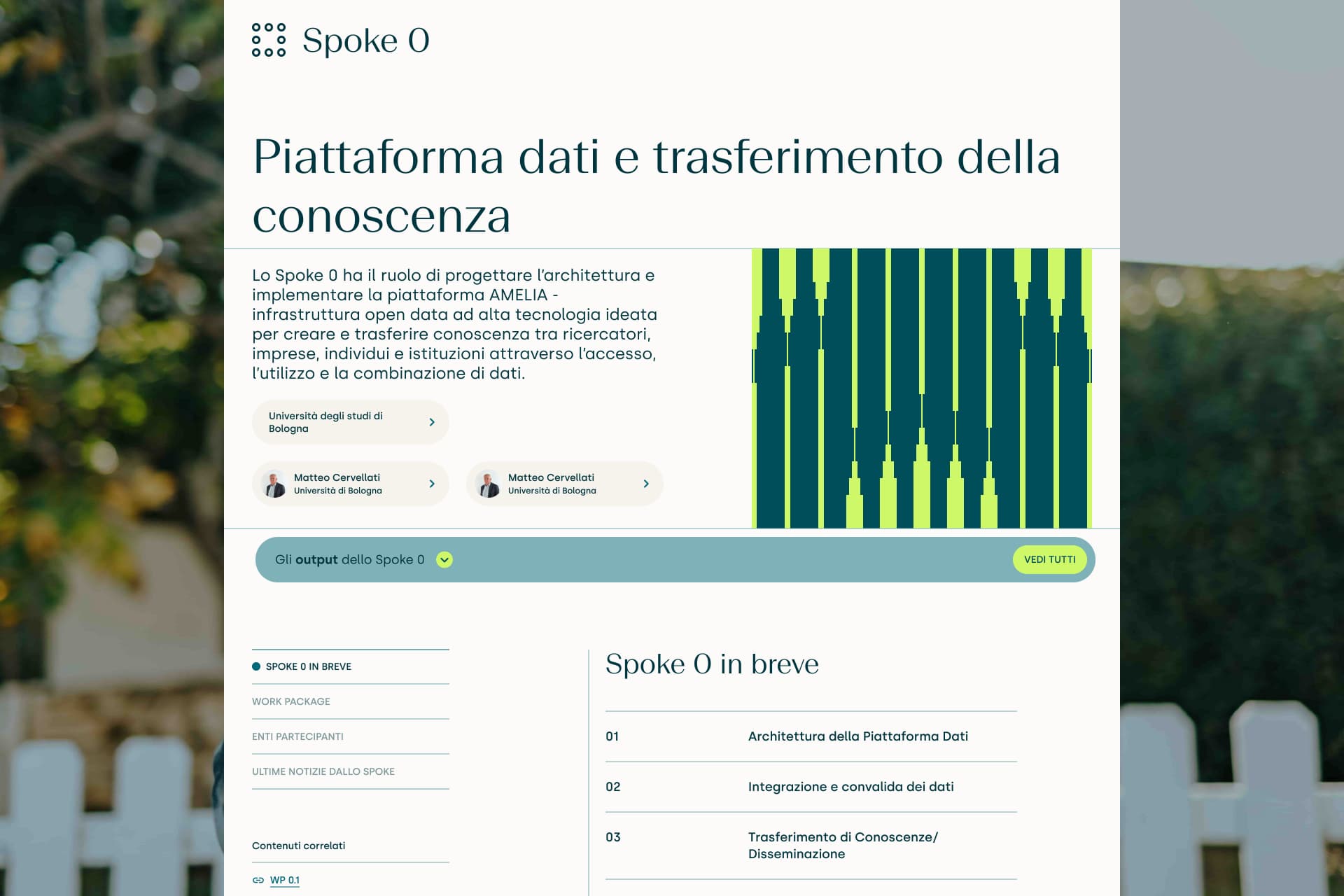
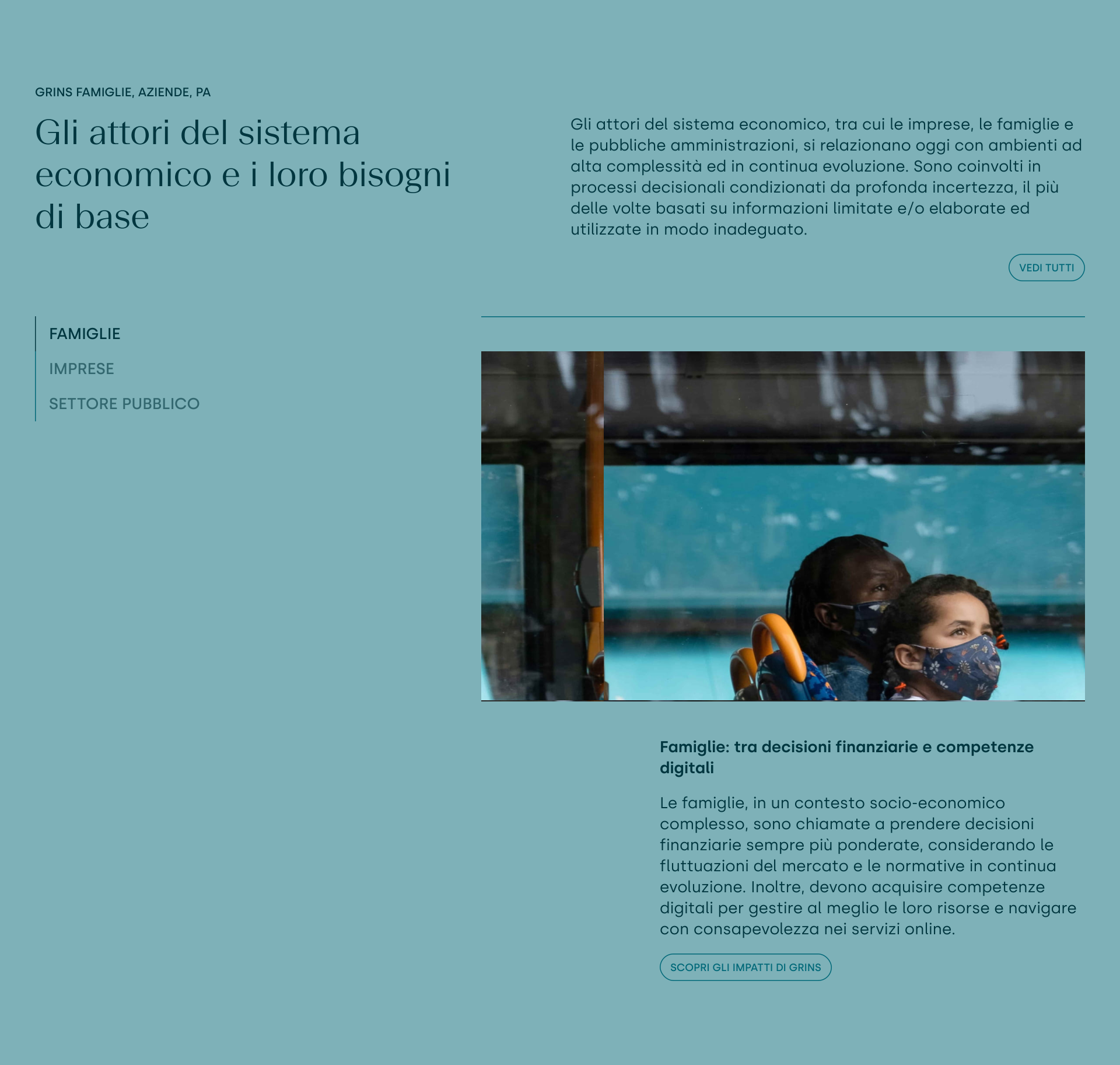
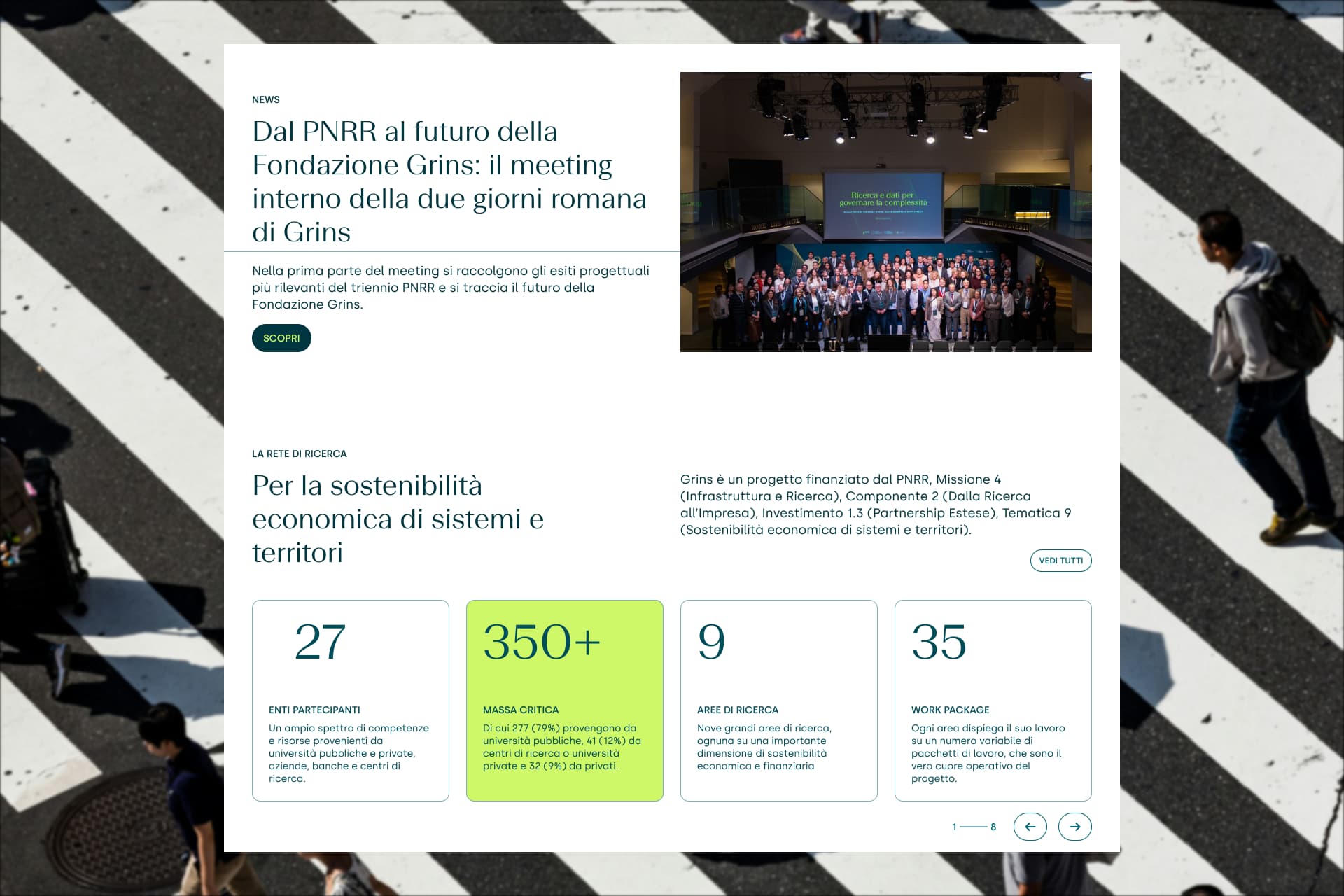
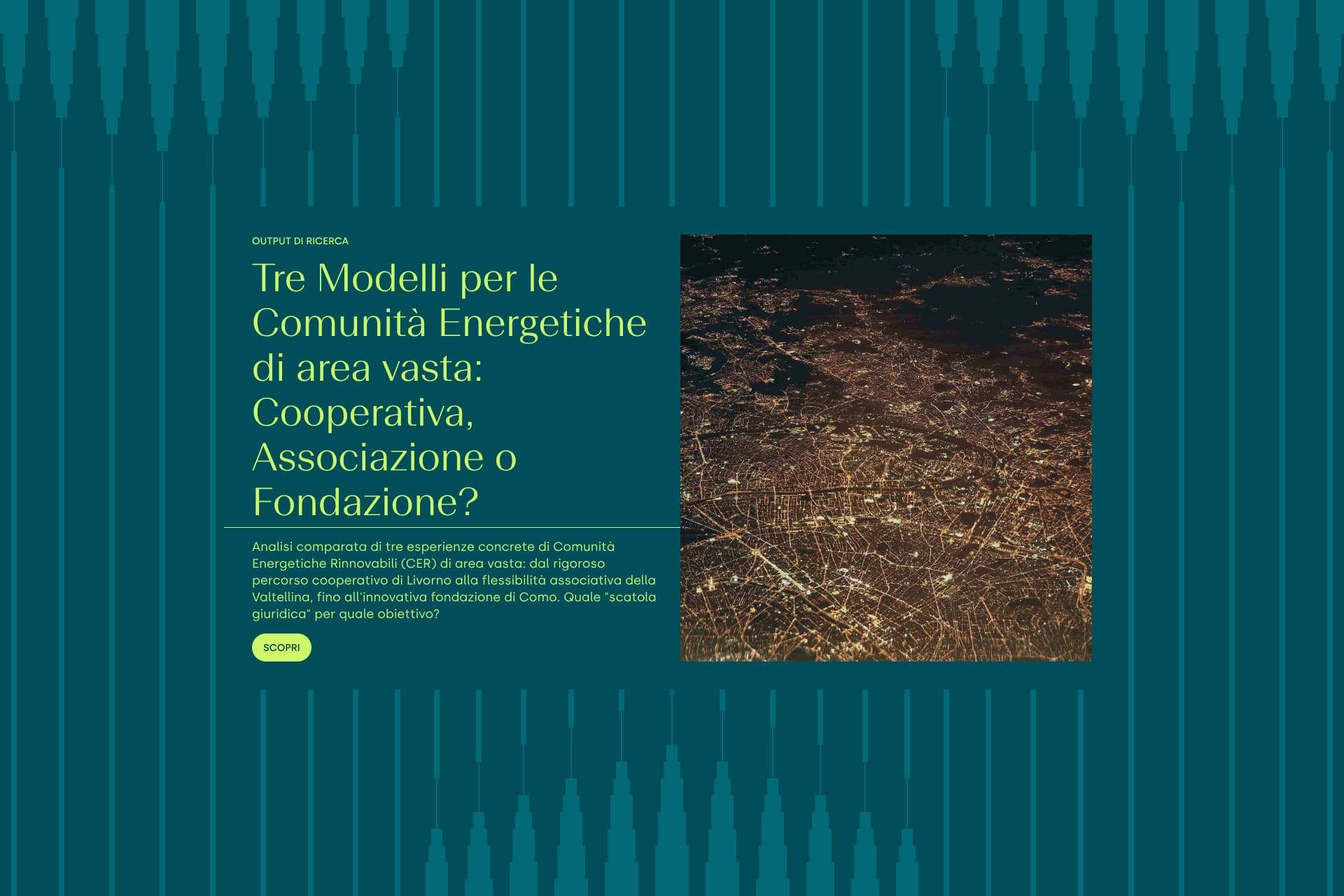
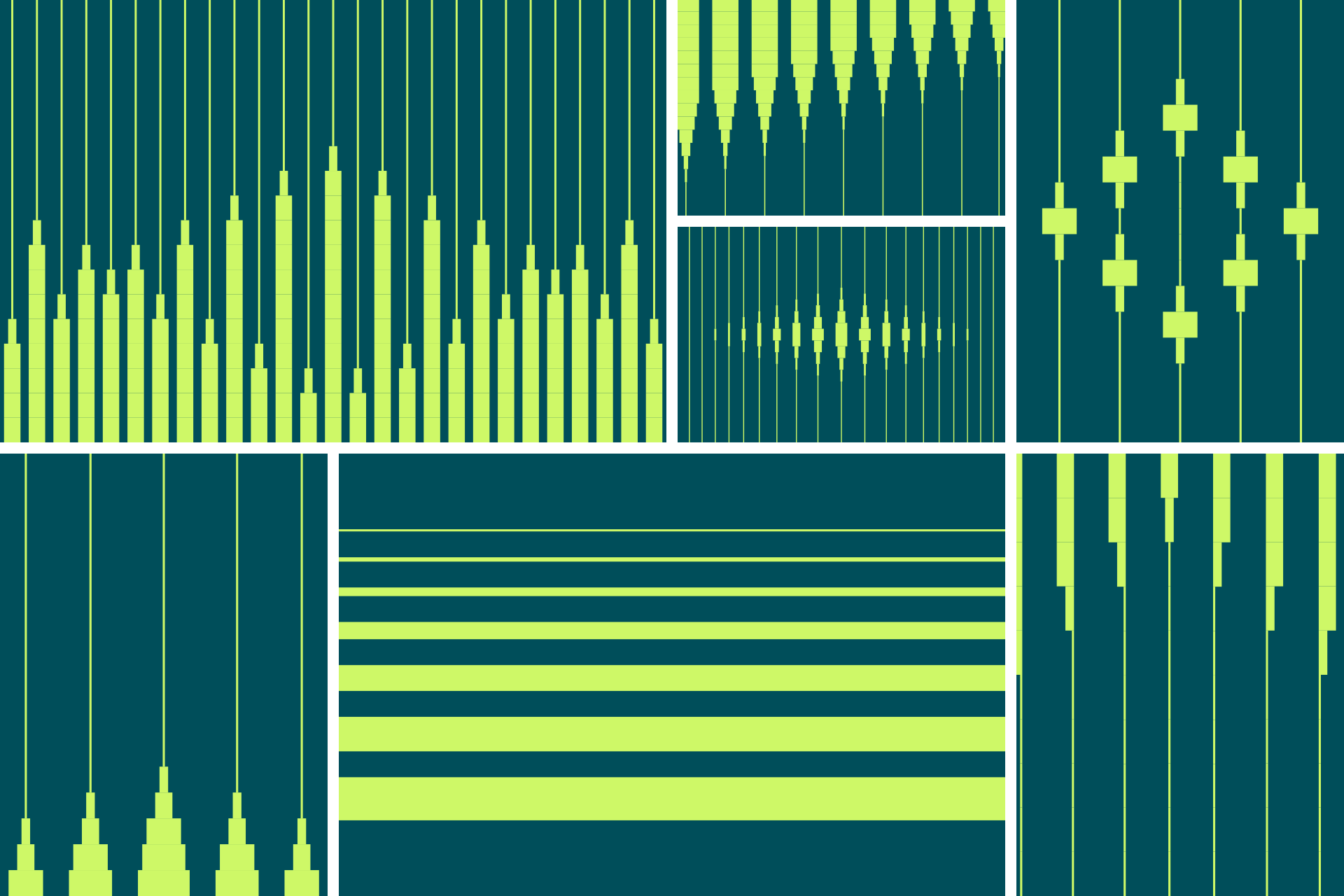
The average website of an extended partnership adopts a linear architecture, Governance, Spoke, News, Funding calls, which puts the formal structure of the project in the shop window. grins.it does something different: it translates the network into a system of access navigable on several levels. The six main areas, Project, Research, Outputs, Amelia, Foundation, Newsroom, are related views of the same dataset.
Research is organised into three thematic macro-areas articulating the eight Spokes, each with its own work packages, deliverables, people and outputs. Whoever enters from their own theme, sustainable finance, CO2 reduction policy, social sustainability, moves through the site horizontally, crossing research, outputs and public engagement as parts of the same story.
Underneath, a stack designed around the complexity: a PWA in Remix.run, headless Drupal 11, REST APIs in Node.js, microservices, DevOps practice. The UI is in partnership with LCD; backend and frontend are Dinamo's.
Three years of integrated dissemination
For the whole three years Dinamo managed both the strategy and the day-to-day of communication, across the entire chain: content production, social media, media relations, coordination of the working groups in the Spokes. The social channels, starting with the Foundation's LinkedIn page, carried the research towards a professional audience of institutions, businesses and researchers.
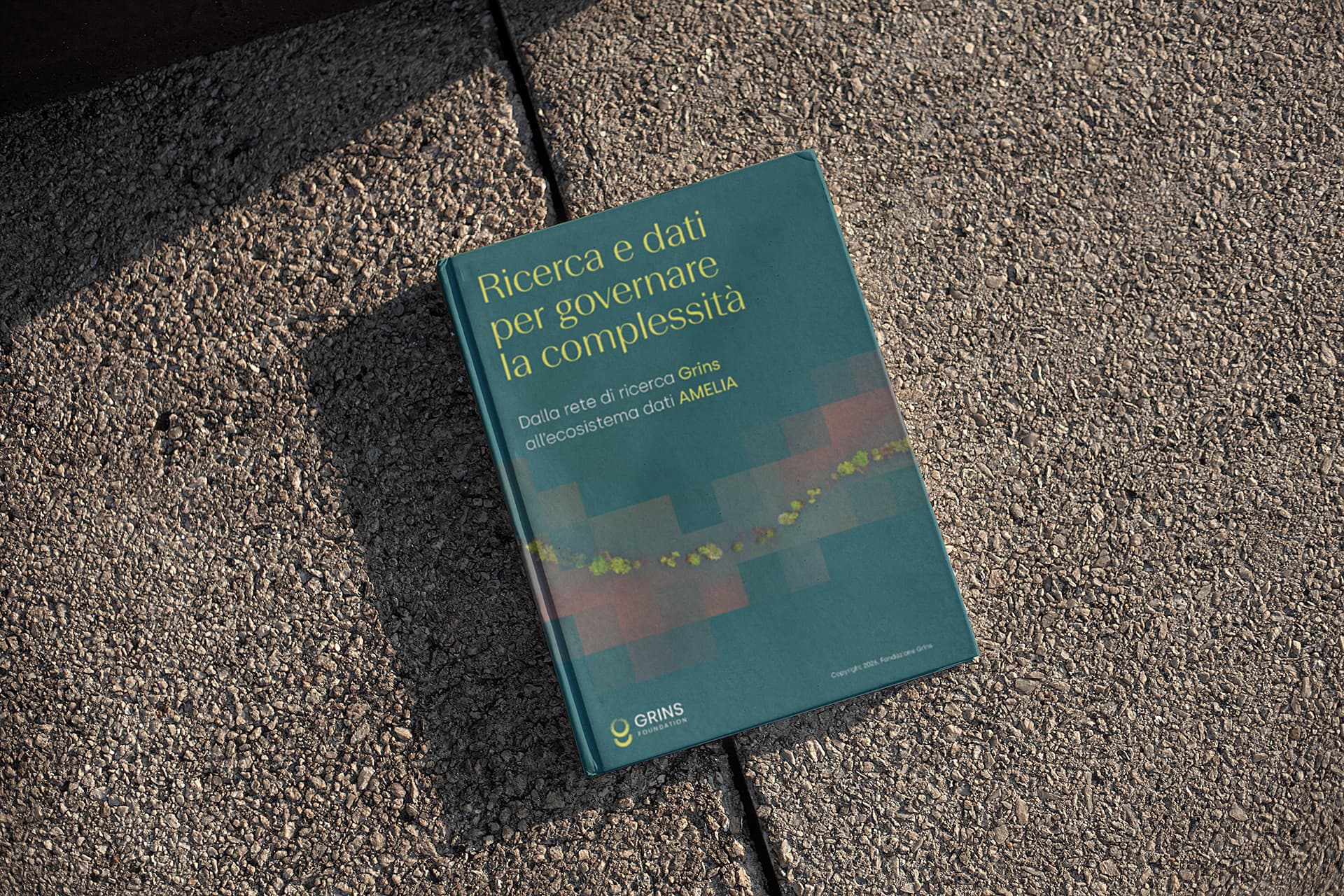
The objectives: to inform a wide audience, to involve the network's stakeholders, to promote open access to the research and to give its impacts their due. The editorial close of the three years came with the project Handbook in January 2026, which gathers and summarises the solutions of the Foundation and of the AMELIA platform for institutions, businesses and policy makers.