Project
A handbook on Italian cuisine: editorial and graphic design
- Area
- Identity
- Year
- 2026
- Main link
- Browse the handbook
The Vademecum sulla cucina italiana. Evidenze scientifiche e benefici per la salute (A handbook on Italian cuisine. Scientific evidence and health benefits) brings together culinary traditions and scientific knowledge. Promoted by the Italian Ministry of Foreign Affairs and International Cooperation with the scientific collaboration of the OnFoods Foundation, the volume gathers evidence on the relationship between diet, health and Italian cuisine.
The subject is broad: from characteristic ingredients to balanced meals, from preparation techniques to seasonality and biodiversity, up to conviviality, the different stages of life and the role of food service. The editorial work had to give a readable form to varied content, keeping the passages between scientific evidence, eating practices and traditions clear.
An editorial structure to find your way between scientific research and public communication on food
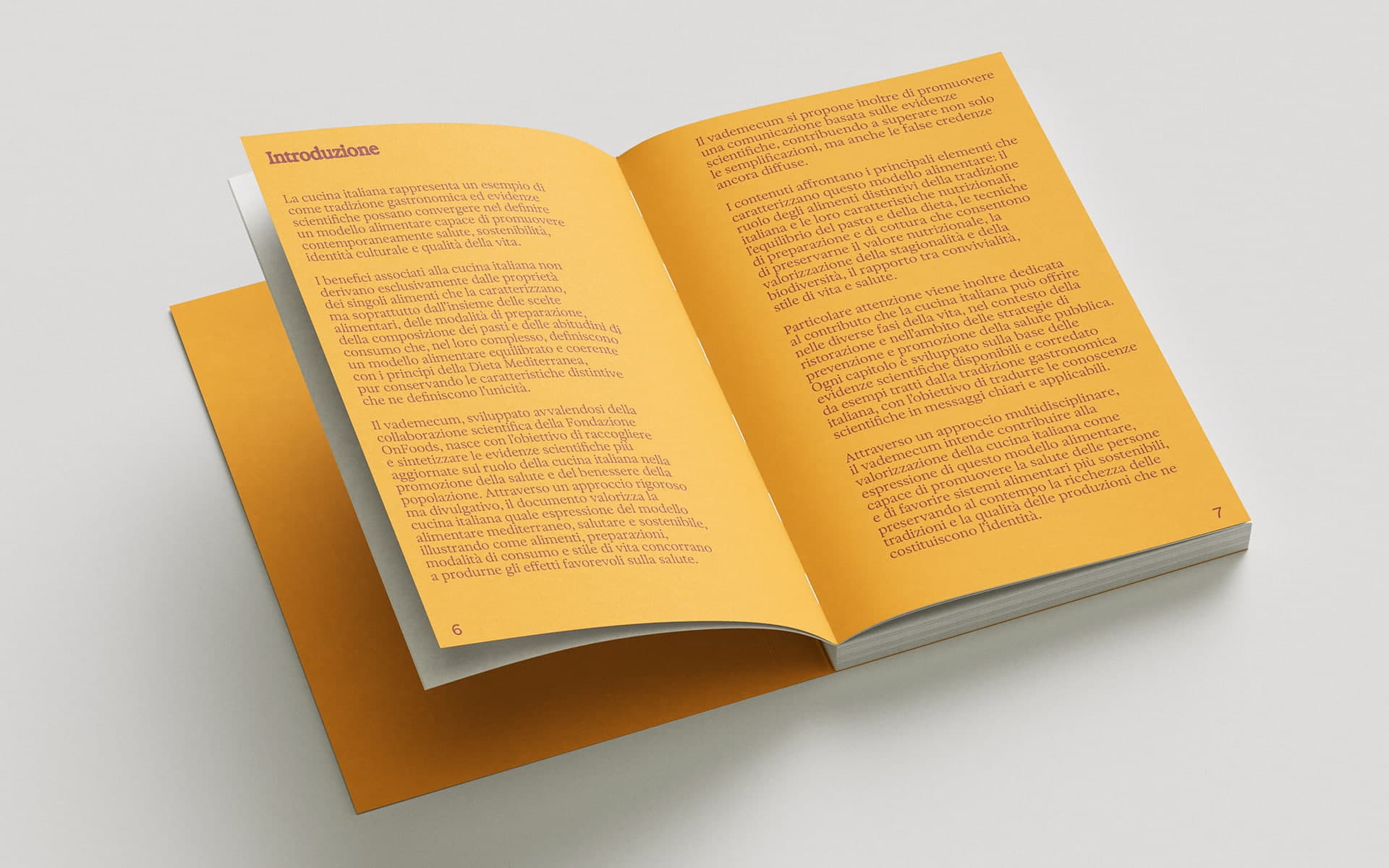
The volume leads readers from the general picture to specific topics. The opening frames Italian cuisine as an expression of the Mediterranean model. The following chapters deal with foods, meal composition, cooking methods and the relationship between diet and health. Further sections focus on the most common myths and simplifications, on nutrition at different stages of life and on ways to promote balanced choices in institutional catering.
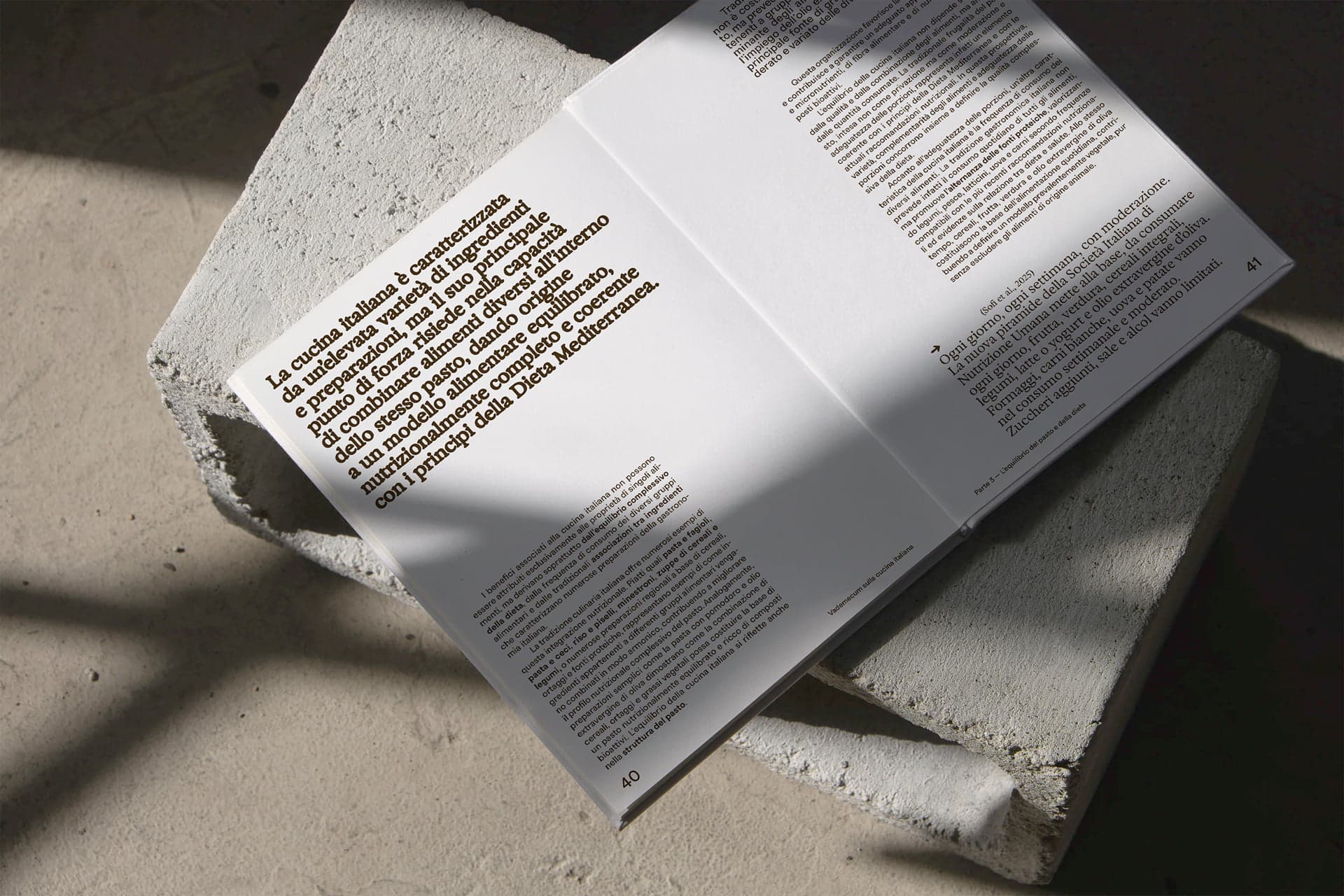
Dinamo worked on the editing and on the organisation of the content, in dialogue with OnFoods, which wrote the texts and carried out the scientific review. The hierarchy of headings, paragraphs and summaries makes the different reading levels recognisable. Boxes such as Four myths in brief and The stages of life in brief help identify the key points, while the bibliography keeps the reference to the sources.
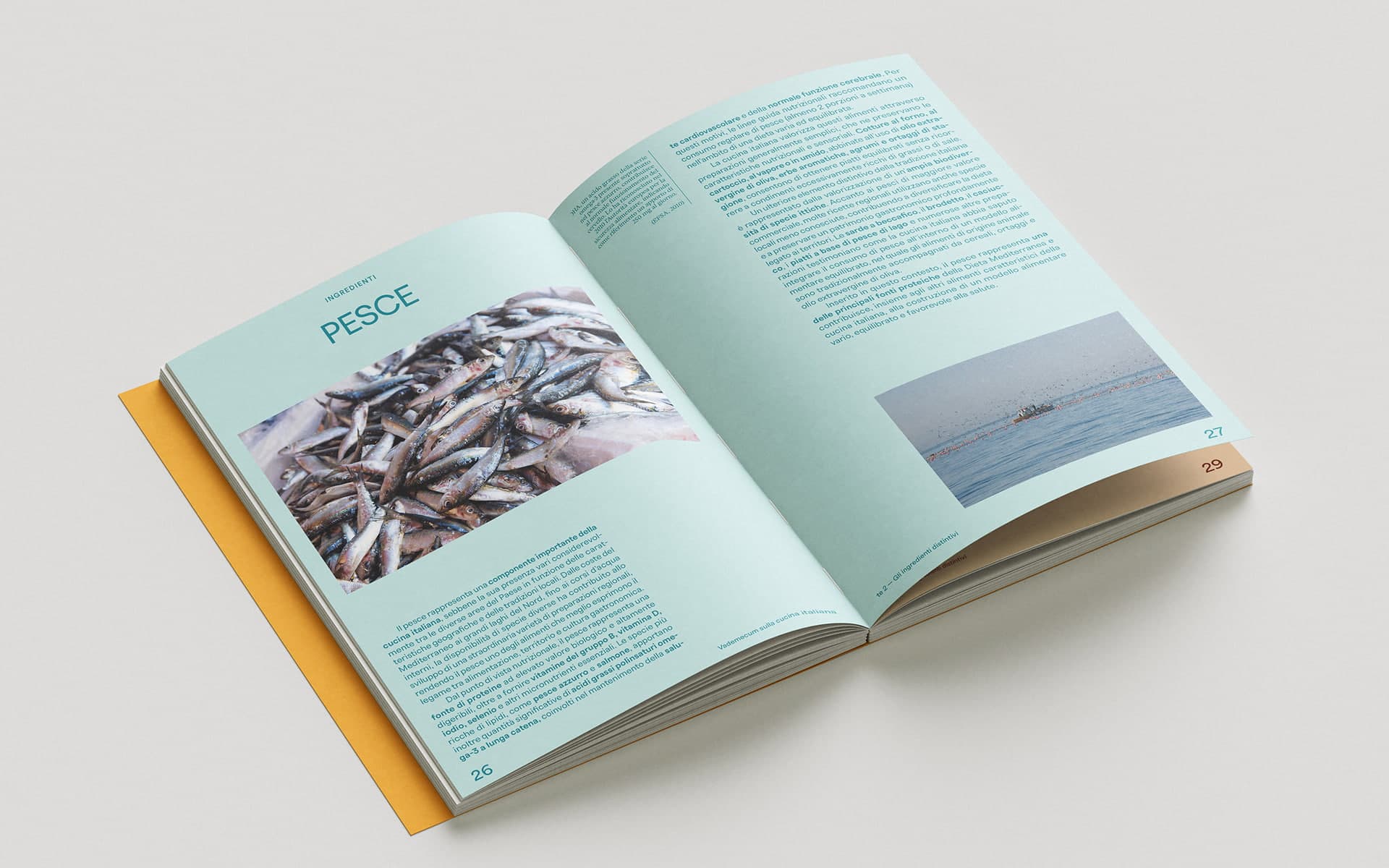
A visual language for ingredients and content
The graphic design builds a consistent system for a volume that alternates explanations, practical advice and research data. Chapter openings introduce foods through cut-out images with a recurring graphic shadow. Photography becomes part of the editorial structure: not decoration, but an element that helps distinguish and connect the sections.
Photo editing helped bring different images into a single visual grammar, working on how the subjects are rendered and on the colour consistency of the volume. A shared treatment lets the photographs keep their own character without breaking the continuity between chapters.
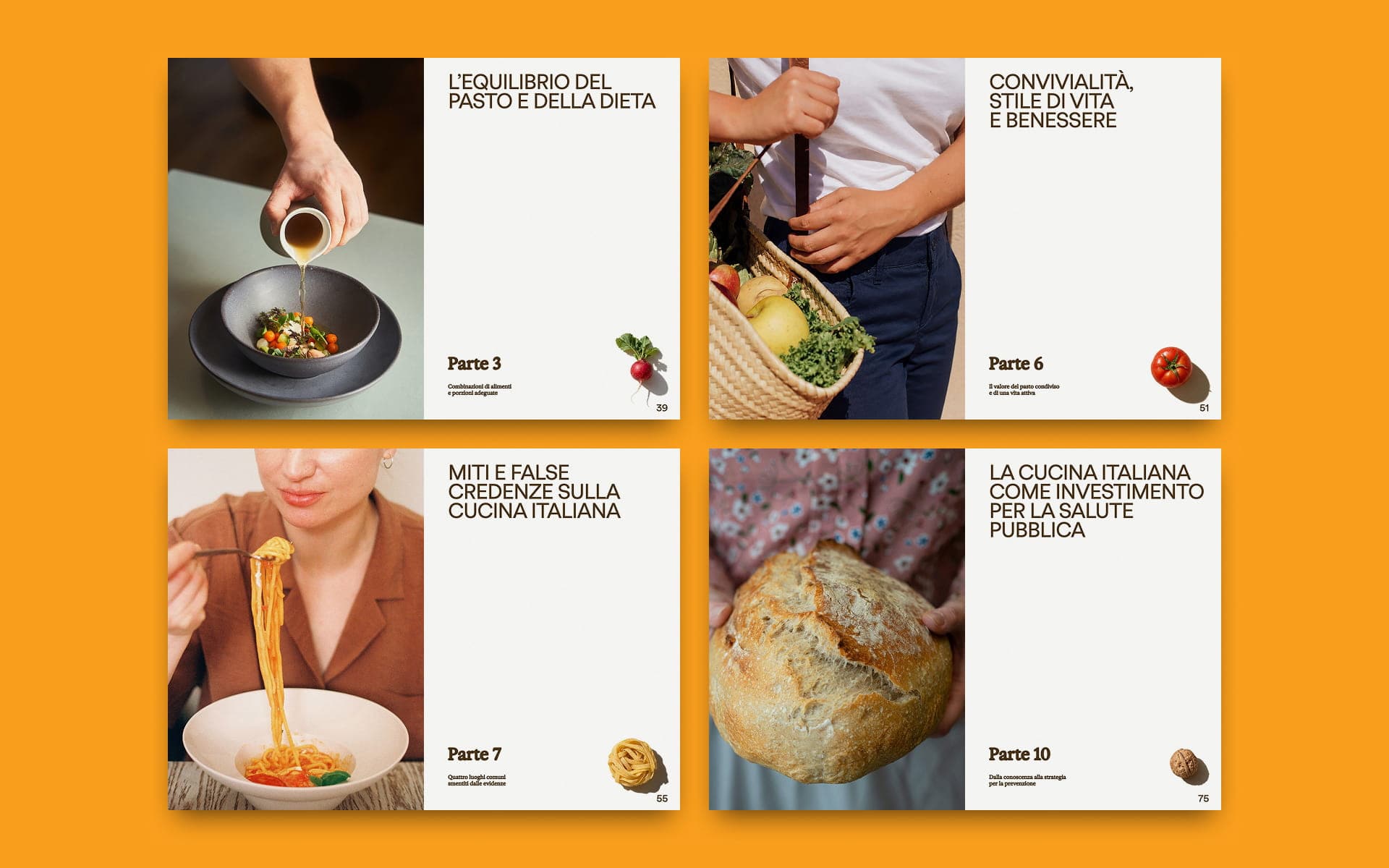
From the single food to the dietary model
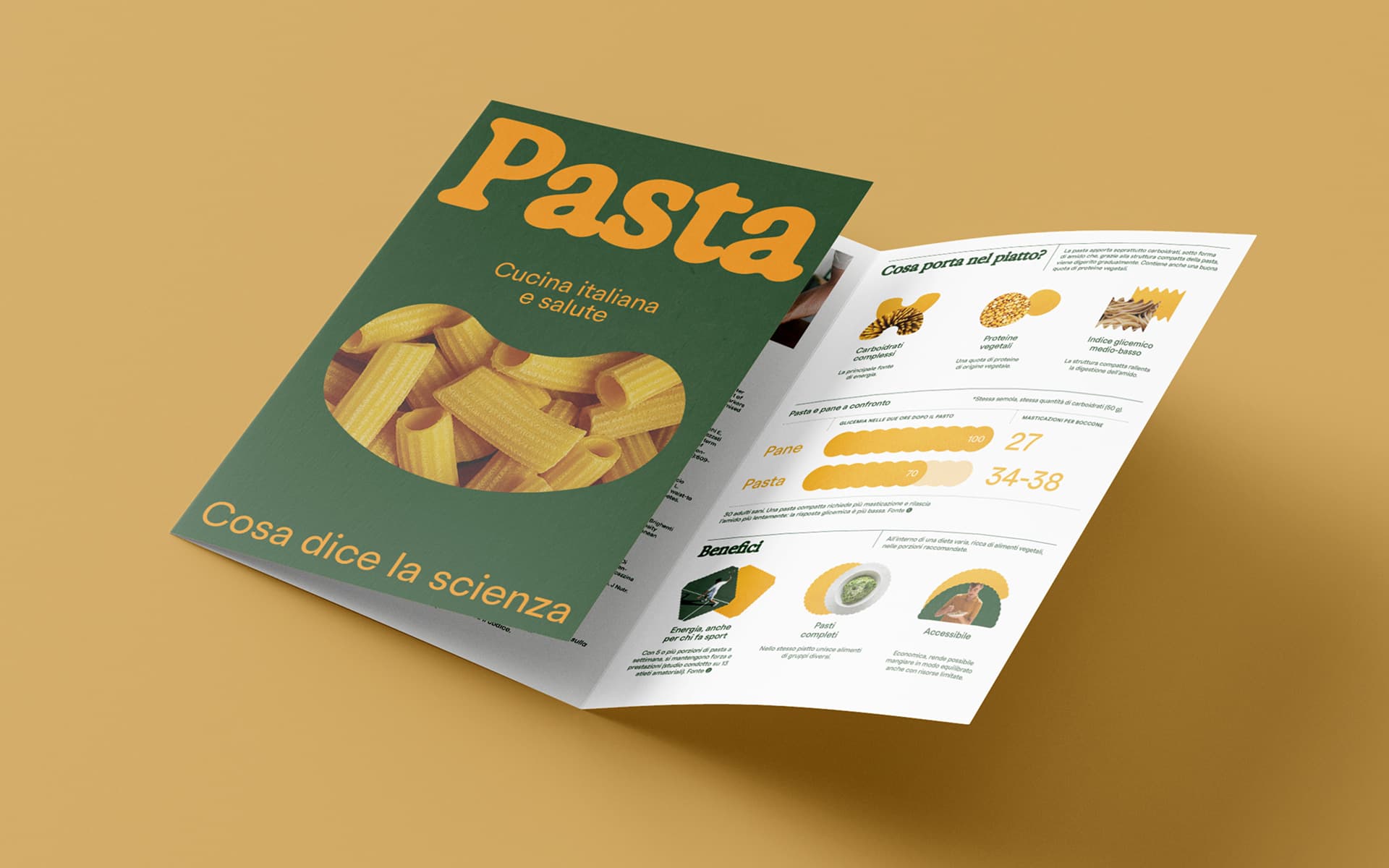
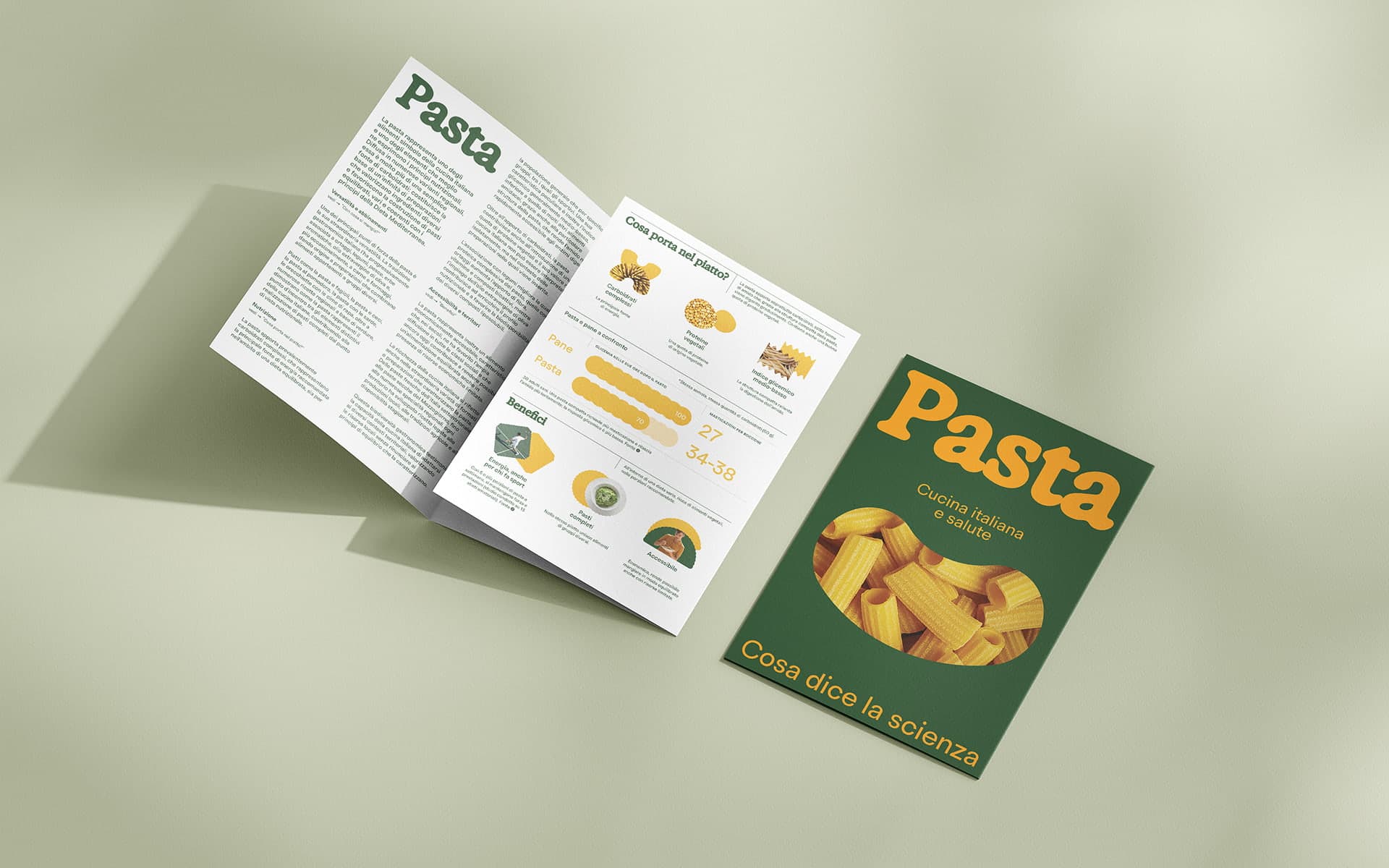
Pasta appears in the chapter on ingredients, next to extra virgin olive oil, fruit, vegetables and other traditional foods. The handbook looks at its versatility and its presence in different dishes, from pairings with pulses and vegetables to regional recipes. The point is not to attribute isolated properties to a single food, but to show how ingredients, quantities, preparations and habits contribute to the overall quality of the diet.
In the project, this approach also guides the editorial and graphic work: giving space to individual content while making visible the relationships that hold it together. The result is a reference publication that brings scientific evidence into a rich account of Italian cuisine.