Project
The documentary that takes us towards the new international research hub of the University for Foreigners of Siena in San Casciano dei Bagni
L’ultimo strato. Archaeology, research and community in San Casciano dei Bagni
- Area
- Relations
- Year
- 2026
- Main link
- Watch the full video
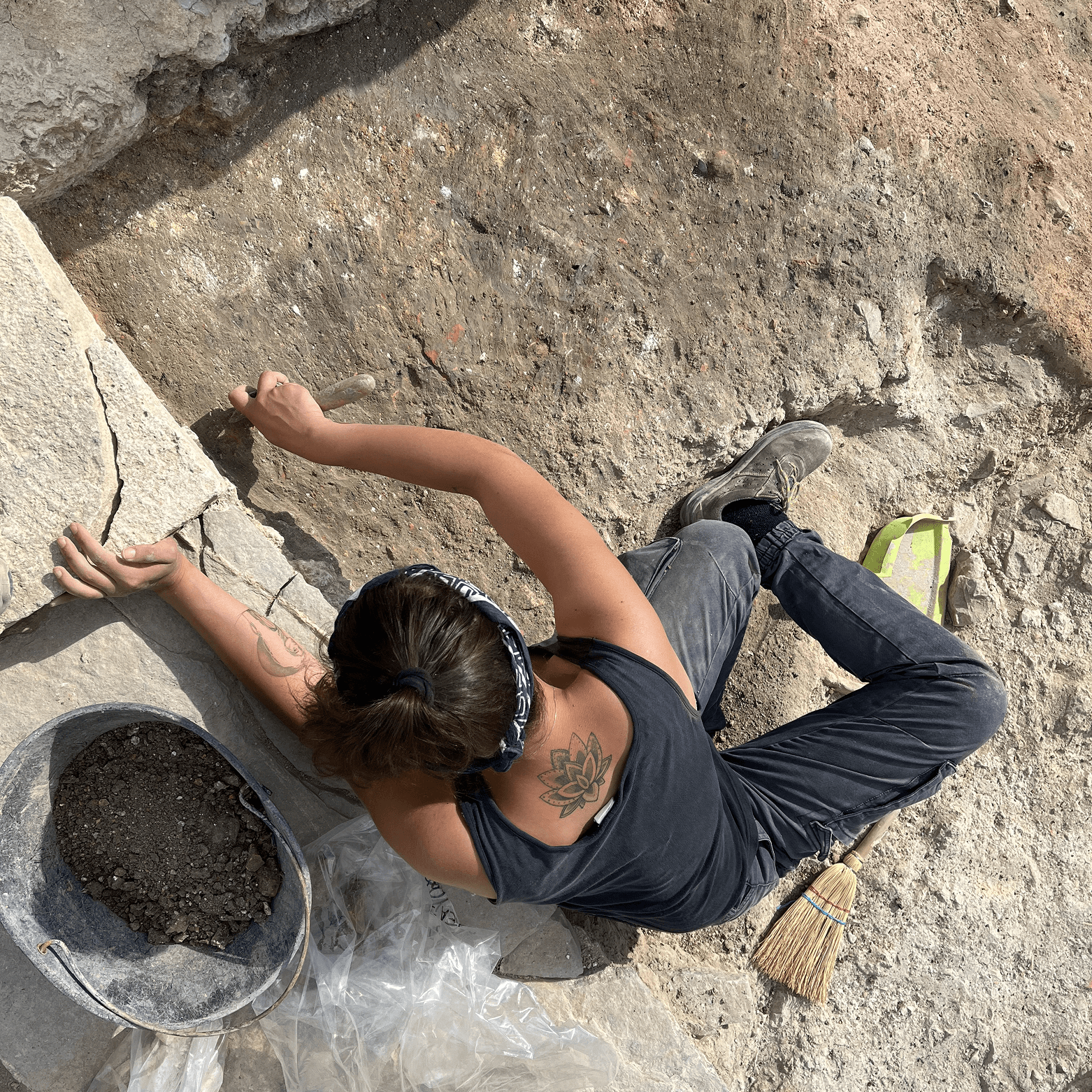
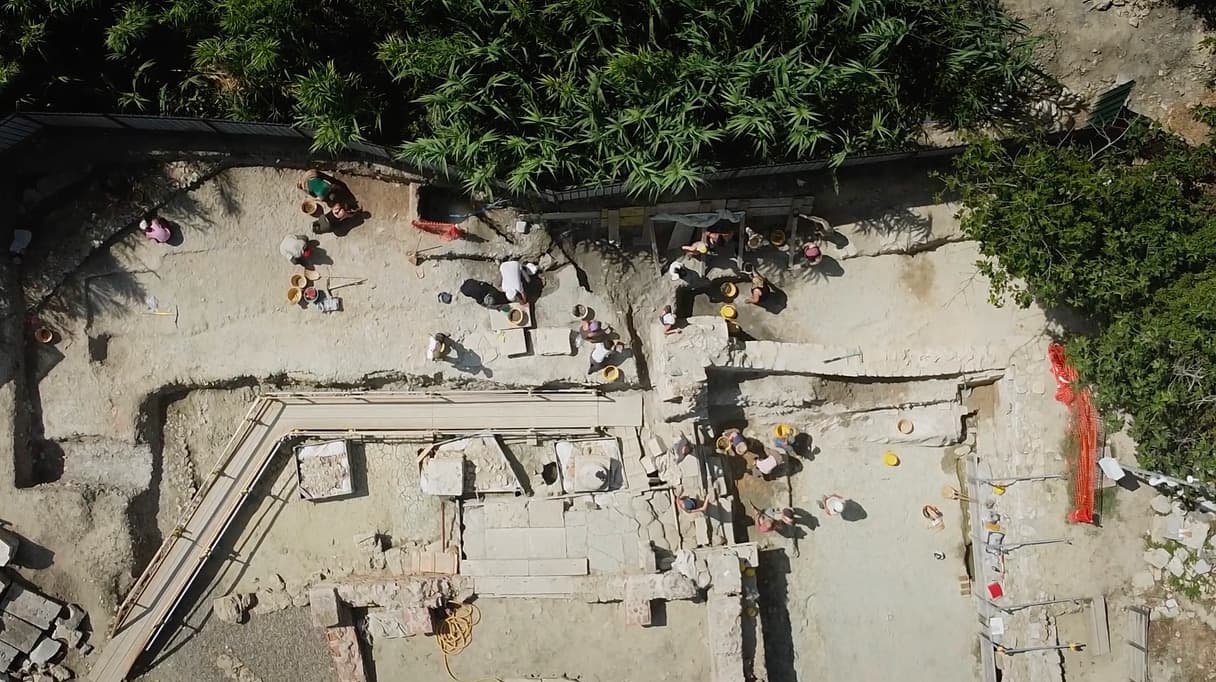
For ten years the Bagno Grande area of San Casciano dei Bagni has been at the centre of archaeological research that has brought to light an Etruscan and Roman sanctuary built around the thermal springs.
The documentary L’ultimo strato (The last layer) starts from here to tell another story. It follows the relationship that has grown over time between the excavation and the village above it. Archaeologists, conservators, students and researchers work alongside a community that has taken part in the growth of the project and is now preparing to host a new international research hub of the University for Foreigners of Siena in its historic centre.
The film looks at archaeological heritage as a process still under way, one that produces research, relationships and new forms of presence in the area.
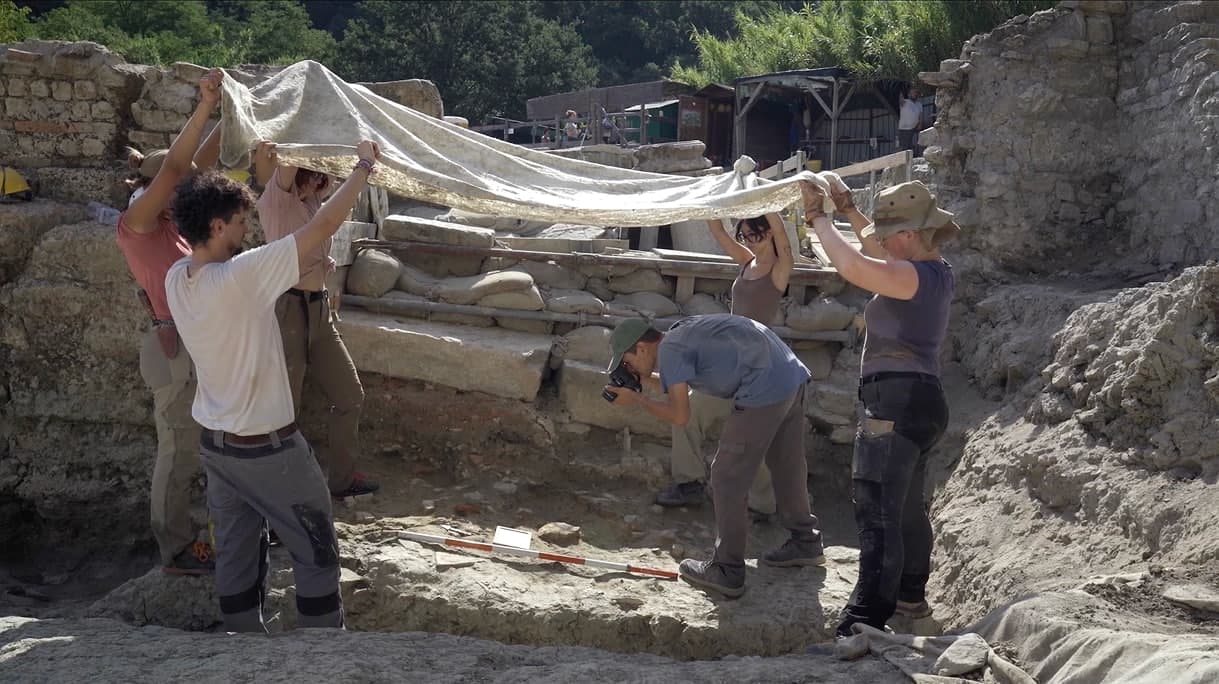
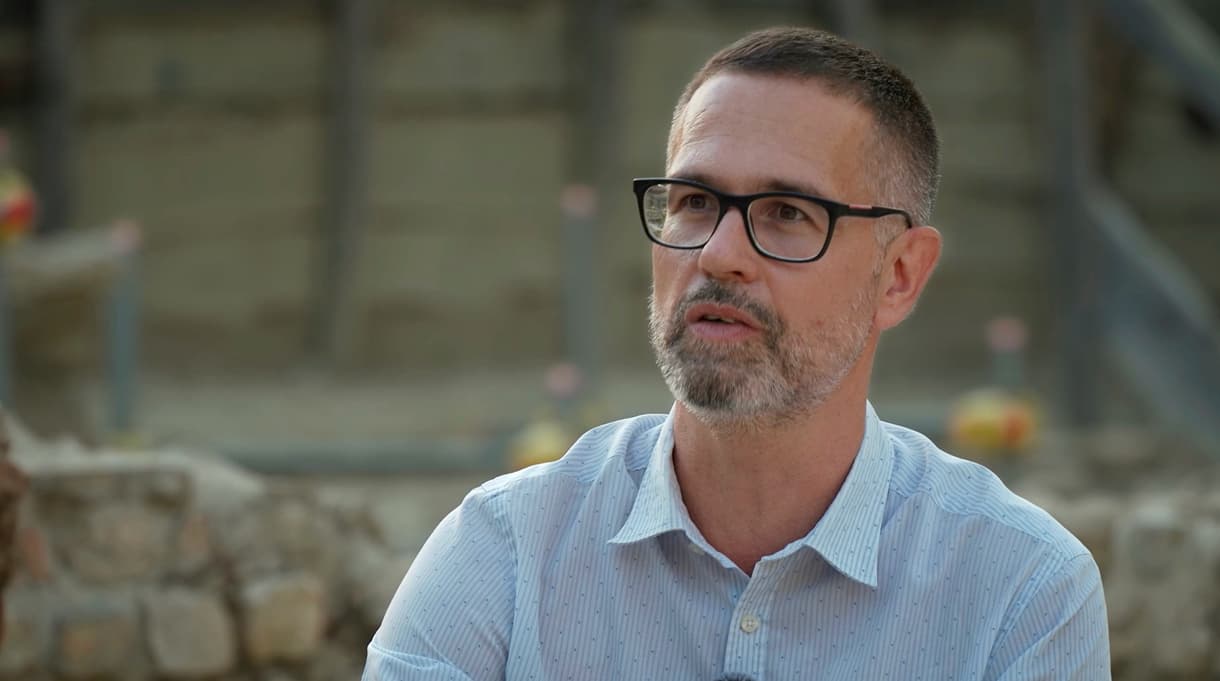
Archaeology as a process
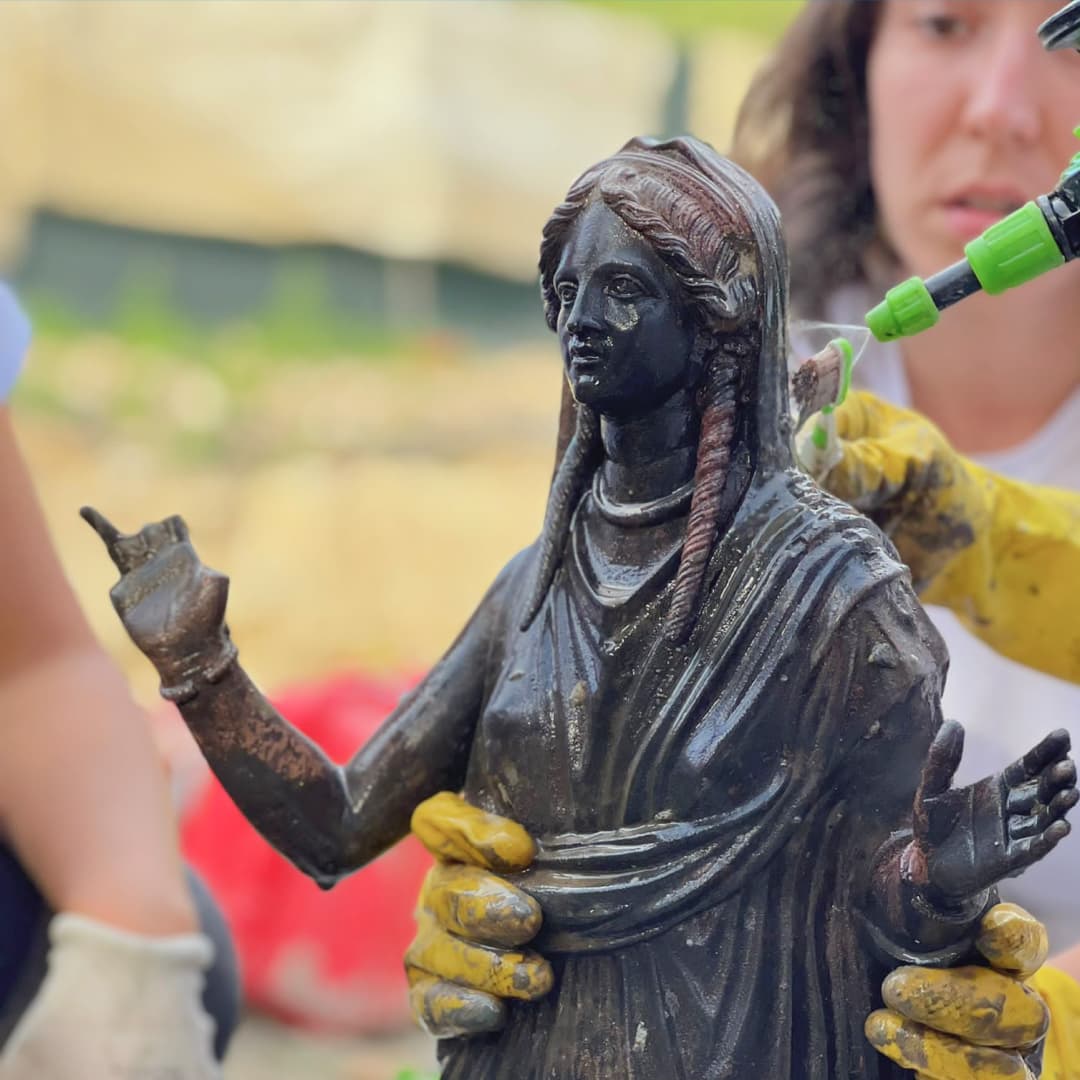
The documentary deliberately moves away from the rhetoric of the exceptional discovery. The Bagno Grande bronzes are part of the story, but they are not where it ends.
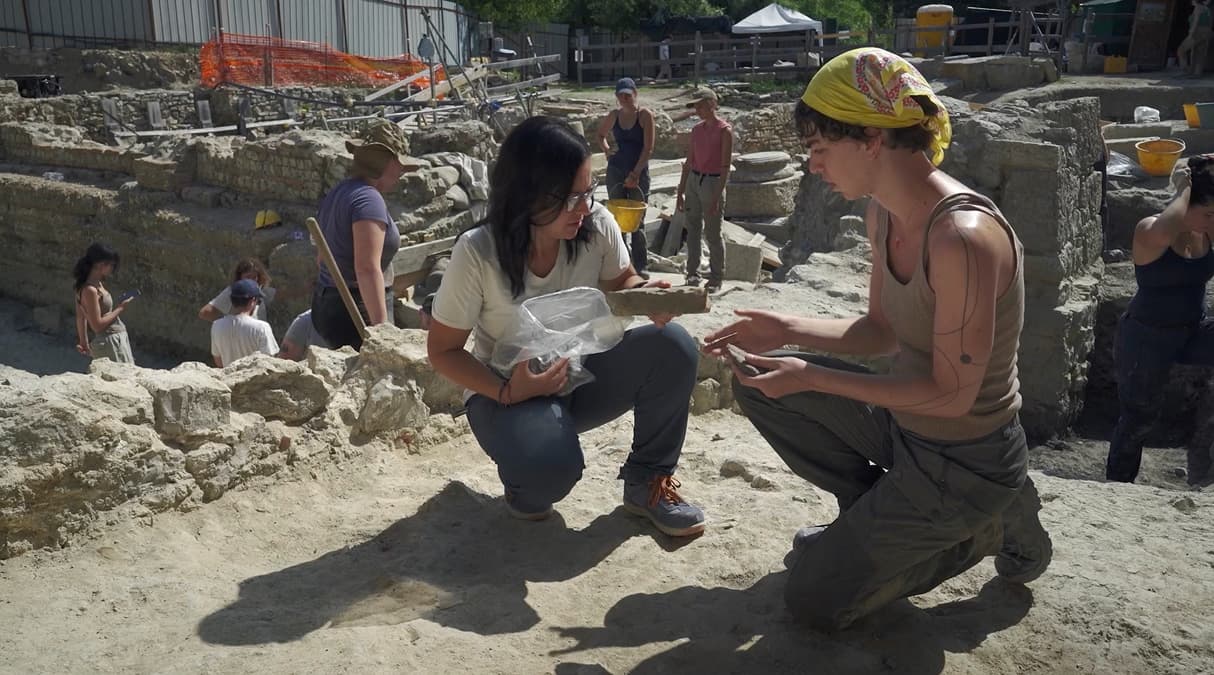
The camera follows the daily work instead: the walk down to the excavation in the morning, the fieldwork, the laboratory, the lessons, the museum, the people who move through the village. The story then moves towards a building in the historic centre, unused since the 1990s and set to become the new home of the hub.
This is where the metaphor behind the title takes shape. For archaeologists, reading a place means reading its layers. In San Casciano the last layer does not belong to the past. It is the one being laid down today, through research and the people who grow around it.
From the Bagno Grande to the village
The film is built in three movements: the excavation, the village, the palazzo.
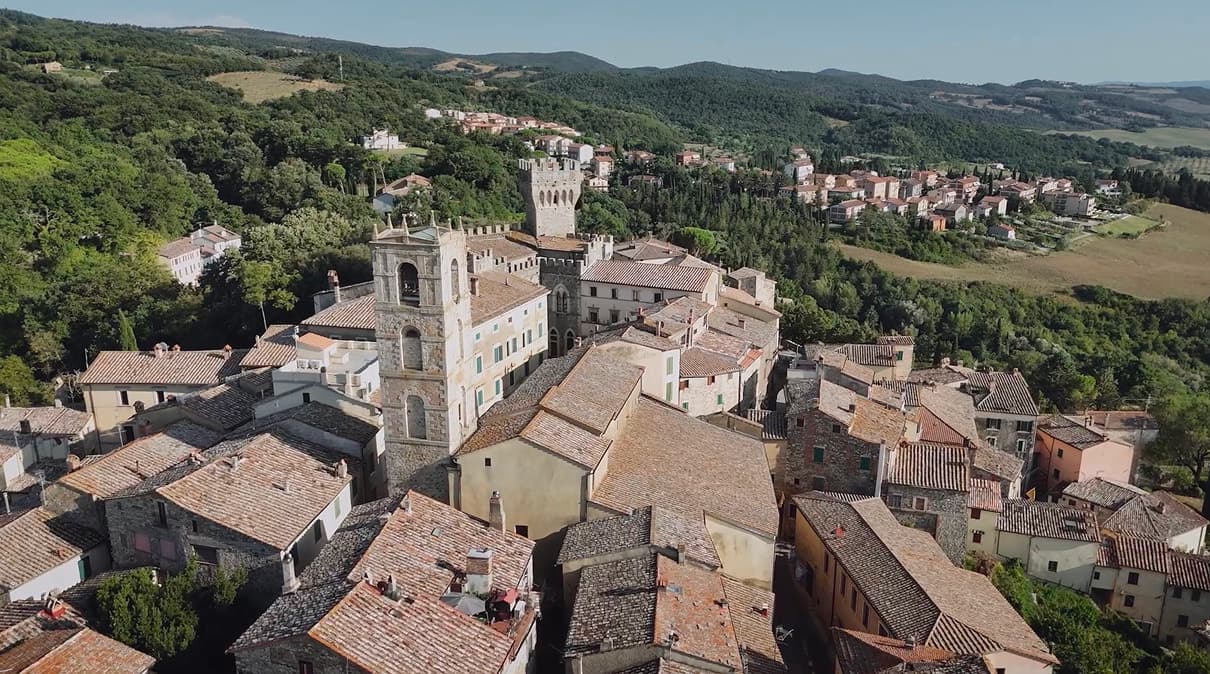
The excavation introduces the research and the scientific community. The village shows what has been built around it: laboratories, training, local associations, administration and everyday life. The palazzo anticipates what is to come, when research will have a permanent home in the heart of San Casciano.
The voices of archaeologists, students, local administrators and members of the archaeological association form a choral account. The new centre does not appear as something added to the area, but as the outcome of a path already under way.
A documentary made in the field
Dinamo developed the concept and narrative structure of the documentary, working on the writing, the interviews and the editorial direction together with 24FPS.
Filming took place at the Bagno Grande, in the research spaces and in the historic centre of San Casciano dei Bagni. The crew followed the excavation, laboratory and training activities over several days and accompanied the protagonists to the places where the new project is taking shape. The direction alternates documentary observation, interviews and aerial footage, leaving an important part of the narrative to daily actions and the sounds of the places.
The result is a story about the passage between two times: what archaeology brings to light and what a community is building in the present.
Credits
Client: CADMO Centre, University for Foreigners of Siena
Production: Dinamo and 24FPS
Writing and production: Giulio Burroni
Direction and editing: Milo Adami
Filming: Amedeo Cavalca, Matteo Lotti
Production assistant: Massimiliano Manetti
Aerial footage: Ludovico Salerno
Colour: Jacopo Niccoli
With the Municipality of San Casciano dei Bagni, the Soprintendenza ABAP for the provinces of Siena, Grosseto and Arezzo, the Associazione Archeologica Eutyche Avidiena and the Istituto Centrale per il Restauro.
Documentary produced as part of the FOE_CADMO project, funded by the Italian Ministry of University and Research.